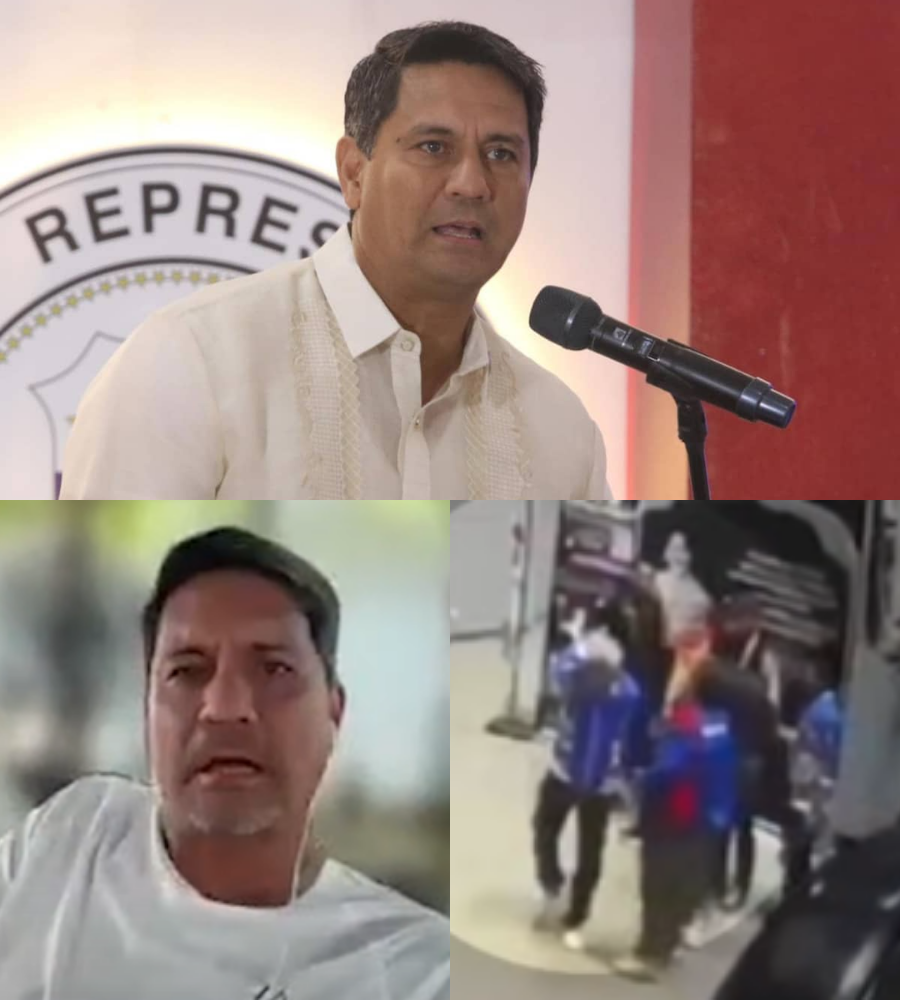
SHOCKING SEA GAMES SHOWDOWN: Richard Gomez Allegedly Assaults Philippine Fencing Association President Rene Gacuma Over Alleged Favoritism, Sparks National Outrage and Raises Questions About Athlete Rights and Governance — “I’m Not Sorry, They Took Away the Athlete’s Chance!
MANILA, Philippines — The 2025 Southeast Asian (SEA) Games in Thailand erupted into controversy after Leyte Representative and actor-athlete Richard Gomez allegedly physically confronted Philippine Fencing Association (PFA) president Rene Gacuma, igniting a storm of social media discussion and public debate over athlete favoritism, governance, and sports ethics.
The incident, which was captured on CCTV footage at a fencing competition, shows Gomez allegedly striking Gacuma in the head, leaving the PFA president visibly shocked and momentarily incapacitated. The video quickly circulated online, drawing national attention to a situation that many are calling unprecedented in Philippine sports history.
In a statement to 24 Oras reporter Mark Salazar, Gomez admitted that he did in fact hit Gacuma, explaining that his actions were driven by anger over what he perceived as favoritism against an athlete from Ormoc. “Nakatayo ako, pinapanood ko ‘yung laro tapos lumapit sila sa akin. Nung kinakausap ko na sila, tumalikod e. Lalapit sila, makikipag-usap tapos tatalikuran mo ako, bastos ka talaga. Eh talagang tinamaan,” he said.

The root of Gomez’s anger, he explained, was the PFA’s decision to remove the Ormoc-based athlete from an individual event, despite the fencer being ranked first in national qualifiers. Gomez argued that the athlete had proven their merit and deserved the opportunity to compete. “Ang akin kasi rito, nag-qualify ‘yung bata, nag-qualify siya. Sa lahat ng qualifying events ng fencing, sumali ‘yan, nag-number one, hindi nila tinatalo, nahihirapan sila dIyan. And then bibigyan nila ng rason na hindi raw nagte-training, hindi raw nagpapakita. Sabi ko, ‘How sure are you?’ kasi taga-Ormoc ‘yan,” Gomez stated.
Meanwhile, PFA president Rene Gacuma submitted an official incident report to the SEA Games Philippine chef de mission, Dr. Jose Raul Canlas, describing the encounter as unprovoked and alarming. “Hindi daw [ako] authority to replace the athlete. He squeezed my hand really hard. He stepped heavily on my left foot like I couldn’t move,” Gacuma recounted.
Gacuma further explained, “He capped my jawline, squeezed it really hard (and said) ‘HR ka lang, hindi mo alam ang maging isang atleta!’ He said, ‘Alam ko saan ka nakatira.’” According to Gacuma, the confrontation was not only physical but also verbal, and he described the situation as deeply distressing given Gomez’s dual role as a former fencer, a parent of an athlete, and a sitting congressman.
The PFA defended its decision to remove the athlete from the individual event, citing repeated non-compliance with training schedules and failure to participate in government-funded international training opportunities. “We are supposed to build character. Compliance is huge. Even though they are talented, but non-compliant to the behavior that is expected of them, who are athletes of the Philippine Sports Commission, who are funded by the government, it’s unfair to those who are struggling,” Gacuma said.
Despite the individual event setback, the athlete went on to win a bronze medal in a team event, which added further complexity to the debate. Gomez, however, remains adamant that the athlete’s right to compete was unjustly denied, claiming he has no intention of apologizing. “I’ll not say sorry dahil mali ang ginawa nila. Tinanggal nila ang opportunity ng bata na maglaro sa SEA Games, tinanggal nila ang opportunity ng bata na magkaroon ng medalya, sinayang nila ang pondo ng gobyerno,” Gomez said.
Gomez emphasized that his anger was not driven by political position but by his perspective as both an athlete and an advocate for fair treatment in sports. “The paggalit ko sa kanya hindi bilang congressman, nagalit ako sa kanya bilang atleta at bilang opisyal ng sports association,” he explained.
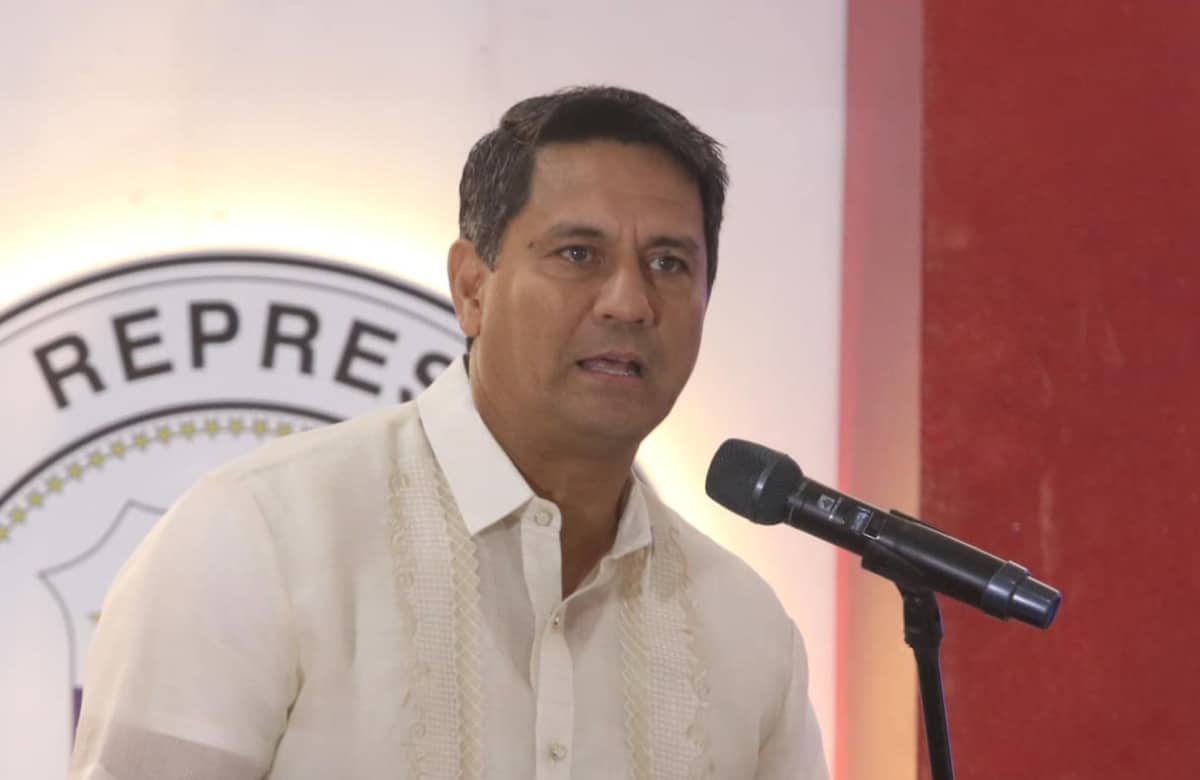
For his part, Gacuma stood firm in his position, stating that the confrontation was uncalled for and harmful. “I was attacked, I was antagonized, I was assaulted verbally, and I was insulted,” Gacuma said, describing the emotional and professional impact of the incident.
The case raises broader questions about governance in Philippine sports associations, accountability, and the rights of athletes. Social media users have expressed mixed reactions, some supporting Gomez’s defense of the Ormoc athlete, while others criticized the use of physical aggression as a means of resolving disputes.
Legal experts note that the incident could lead to formal investigations by the Philippine Olympic Committee or the SEA Games ethics committee. Both parties have submitted statements, and officials are reviewing the CCTV footage alongside witness accounts. The controversy has sparked public discourse on athlete treatment, favoritism, and the responsibility of sports administrators to uphold fairness and transparency.
The Ormoc athlete, while publicly supportive of Gomez’s advocacy, refrained from commenting on the physical altercation. This decision appears to reflect a desire to avoid further conflict or politicization of the issue.
This event also highlights the tensions that can arise when politics, sports administration, and personal relationships intersect. Gomez’s dual identity as a congressman and former athlete complicates public perception, as his actions are interpreted through both legal and moral lenses.
The PFA insists that its policies are designed to maintain compliance and integrity among athletes who benefit from government support, while critics argue that such decisions should be handled with more sensitivity to individual circumstances and merit-based performance.
Experts in sports law and management have suggested that clearer guidelines for athlete selection and conflict resolution are needed to prevent future incidents. They also highlight the importance of professional conduct among officials, particularly when dealing with high-profile athletes and public figures.
As the SEA Games continue, all eyes remain on how Philippine fencing and sports governance will respond to the controversy. The incident is expected to trigger discussions about reform within national sports associations, ethical standards, and the balance between athlete development and compliance.
The Richard Gomez–Rene Gacuma confrontation serves as a case study in the challenges faced by Philippine sports organizations when personal, political, and ethical issues collide. The incident has left a lasting impression on fans, athletes, and administrators alike, signaling the need for robust policies and clear communication to prevent disputes from escalating into public confrontations.
Both Gomez and Gacuma are expected to provide further statements as authorities review the situation, while the public continues to debate who was right, who was wrong, and what lessons can be drawn from this highly charged and unprecedented event.