What started as a shocking roadside confrontation has now exploded into a public clash between celebrity emotion and political authority, exposing raw nerves about accountability, online justice, and the limits of sympathy in the age of viral outrage.

The controversy began when a disturbing video spread rapidly across social media, showing Carlo Subong, the brother of popular host-comedienne Pokwang, engaged in a heated road rage incident in Antipolo City. In the footage, Subong is seen slapping Crispin Villamor, a man pushing a cart while accompanied by his young daughter. The presence of a child instantly intensified public anger, transforming the incident from a mere traffic altercation into a moral flashpoint that ignited nationwide condemnation.
Authorities moved quickly. The Land Transportation Office (LTO) suspended Subong’s driver’s license for 90 days and issued a show cause order, signaling that the state viewed the matter as serious. As pressure mounted, Pokwang — whose real name is Marietta Subong — took to Facebook to address the storm.
In an emotional video, she apologized directly to Villamor and his daughter, acknowledging that her brother’s actions were unacceptable and stressing that she did not take the incident lightly. Many viewers initially responded with sympathy, seeing a sister publicly condemning wrongdoing while attempting to salvage dignity amid humiliation.
But the tone of the narrative shifted sharply when Pokwang went beyond apology — and issued a warning.
In the same video, the comedienne called out social media users who had begun posting photos of her family members online. Her words soon took a more pointed direction, as she appeared to address an unnamed lawmaker, whom she accused of joining the online pile-on despite having no direct connection to Antipolo.
“You know who you are,” Pokwang said, hinting that the politician was from Bicol. She warned that as a lawmaker, he should understand the implications of cyberbullying and cyberlibel, especially when posting images of people who were not directly involved in the incident. While only one family member had committed the wrongdoing, she argued, the entire family was now being exposed and punished in the court of public opinion.
The message was clear: accountability should not turn into collective harassment.
That warning, however, did not go unanswered.
Soon after, Bicol Saro Partylist Representative Terry Ridon issued a strongly worded statement on his X account, confirming that he believed Pokwang’s remarks were aimed at him. Based on her description and his own public positions on road safety issues — including road abuse and the e-bike ban — Ridon said the implication was unmistakable.
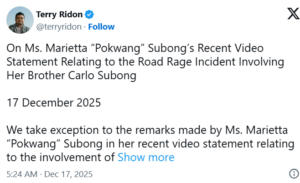
And his response was uncompromising.
Ridon began by reframing the conversation entirely. According to him, the issue should never have drifted toward celebrity hurt feelings or online discomfort, because the real victims had already been identified.
“It was Mr. Subong who consciously chose to commit grave threats, inflict physical injuries, and engage in acts of child abuse,” Ridon said, explicitly naming Crispin Villamor and his daughter as the aggrieved parties.
In one of the most contentious parts of his statement, Ridon rejected Pokwang’s claim that her entire family had been exposed online. He clarified that what was posted were photos of Carlo Subong alone, not of unrelated family members. In his view, the public had every right to know the identity of a person who commits violent acts against ordinary Filipinos.
“This is not cyberbullying,” Ridon implied. “This is public accountability.”
He further justified his involvement by citing Congress’ oversight powers over transportation and public safety issues. Road rage incidents, he explained, fall squarely within that mandate, regardless of where they occur. Geography, in this case, was irrelevant compared to the broader public interest.
The lawmaker then directly addressed the threat of cybercrime complaints, dismissing them as legally unfounded.
“There can be no cyberlibel or cyberbullying where statements are factual and based on publicly available information,” Ridon said, emphasizing that the viral video, Subong’s identity, and the LTO’s show cause order were all matters of public record.
Rather than retreating, Ridon escalated his stance.
He announced plans to deploy a team to the LTO to ensure that due process is strictly followed, with the goal of permanently revoking Subong’s driver’s license. He also revealed plans to coordinate with the Department of Justice to pursue criminal charges, including grave threats, physical injuries, and child abuse.
“These are public offenses,” Ridon stressed, “and cannot be treated as private matters subject to compromise or settlement.”
His closing remarks cut deepest — and sparked the most intense debate.
“You are not the victim here,” he said bluntly, addressing Pokwang indirectly. “The victims are Crispin and his child. The victims are ordinary Filipinos abused by people like Carlo Subong.”
The exchange instantly polarized public opinion.
Supporters of Pokwang argued that while her brother must face the full consequences of the law, the online attacks had crossed into cruelty, dragging innocent relatives into a scandal they did not create. Others sided with Ridon, insisting that fame should never soften accountability, especially when violence and a child’s safety are involved.
What is undeniable is that this incident has grown far beyond a single slap on a city street. It has become a mirror reflecting the country’s deepest tensions — between privacy and transparency, compassion and accountability, celebrity influence and political authority.
As investigations continue and legal processes unfold, the public is left grappling with an uncomfortable question:
Was this an attempt to defend family dignity — or a bid to silence scrutiny?
And in a society increasingly shaped by viral justice, one final question hangs heavily in the air:
When power, fame, and outrage collide, who truly deserves the public’s protection — and who must answer, without excuses, for their actions?
News

Wedding Cake ni Carla Abellana, Tinutukso ng Meme ni Janus del Prado at Netizens! Paano Tinugon ng Bagong Kasal ang Hugis ‘Kabaong’ na Isyu at Bakit Sinasabing ‘Para Sa Amin, Maganda Siya’—Alamin ang Lahat ng Dramatikong Reaksyon sa Social Media
Walang makakapigil sa kasiyahan ng bagong kasal na si Carla Abellana kasama ang kanyang high school sweetheart na si Dr. Reginald Santos. Ngunit kamakailan lamang, ang simpleng detalye ng kanilang kasal—ang wedding cake—ay naging sentro ng online drama at tawanan….

Babala sa 2026: Alleged Masamang Plano at Political Intrigue sa Kongreso! Paano Sinusubukang Patalsikin ang House Speaker at Bakit Pinangangambahan ng Publiko ang Impeachment ng VP Sarah Duterte—Alamin ang Buong Detalye ng Matinding Labanan sa Likod ng Kulungan at Opisina ng Gobyerno
Ngayong bagong taon ng 2026, nagkakaroon na naman ng matinding ingay sa politika sa Pilipinas. Maraming netizens at political observers ang nag-aalala matapos lumabas ang mga ulat tungkol sa umano’y masamang plano para sa ilang pangunahing opisyal ng gobyerno. Isa…
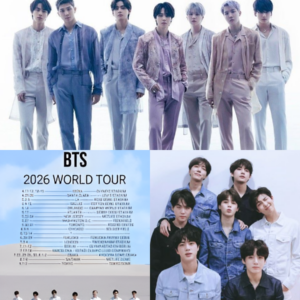
BTS Bumabalik sa 2026! PHILIPPINES Kasama sa Listahan ng World Tour—Magkakaroon ng Eksklusibong Concert sa Manila! Alamin Kung Paano Naghanda ang ARMY Para sa Pinakahihintay na Comeback ng K-pop Supergroup sa Bagong Taon at Bakit Excited ang Bawat Pinoy Fan!”
Pilipinas, maghanda na! Ang pinakamalaking K-pop phenomenon sa mundo, ang BTS, ay opisyal nang nagbigay ng pahiwatig ng kanilang comeback ngayong 2026, at kasama sa kanilang world tour ang ating bansa. Isang pangyayaring nagpasabog sa social media at nagpaiyak sa…

Serena Dalrymple: Mula sa Sikat na Commercial at Mga Premyadong Pelikula Hanggang sa Buhay na Binaraha ng Pagkawala ng Mga Magulang Nang Maaga, At Pag-aalaga sa Kanyang Mga Kapatid—Ngunit Ang Tunay na Nakatulong Sa Kanya Upang Malampasan ang Lahat ng Pagsubok, Magtagumpay, at Matagpuan ang Kaligayahan Bilang Isang Ina at Asawa ay May Lihim na Hindi Pa Alam ng Nakararami… Tuklasin sa Link sa Comments…
Si Serena Dalrymple ay isang pangalan na agad nagpapaalala sa mga Pilipino ng dekada 90 at maagang 2000s – isang batang artista na sumikat dahil sa kanyang mga makukulay na commercial at mga pelikulang pinapurihan ng mga kritiko. Ngunit sa…

Chris Aquino Ginulat ang Lahat Nang Magbahagi ng Nakakabigla at Nakakalungkot na Update Tungkol sa Kalagayan ng Kanyang Anak Bimbe—Paano Na Nga Ba ang Kanilang Mag-iina? Alamin ang Buong Detalye na Nagpaiyak at Nagpagulantang sa Buong Publiko!
Muling nabigla ang publiko nang magbahagi ng isang emosyonal at nakakaantig na post sa Instagram si Chris Aquino noong December 29, 2025. Sa kabila ng mga masasayang larawan na madalas niyang ibahagi sa social media, ngayon ay ibang-iba ang tono….

Three Generations of Exorcists Lived in Poverty: In My Generation, I Use SCIENCE to Catch Ghosts
My family has been in the spiritual cleansing business for three generations. My grandfather was a celestial master, living a pure life. After exorcising spirits, he only accepted two sweet potatoes as a token of gratitude.By the end of his…
End of content
No more pages to load