Few figures in contemporary Philippine politics embody courage, controversy, and conflict as powerfully as Leila Norma Yulalia Josef Maestrado de Lima. A lawyer, human rights advocate, legislator, and relentless critic of authoritarian rule, De Lima’s life story reads less like a standard political biography and more like a political thriller shaped by power, resistance, and survival.
Born on August 27, 1959, in Iriga City, Camarines Sur, Leila de Lima was raised in a family that deeply valued education, discipline, and public service. As the eldest child of Vicente de Lima and Norma Maestrado, she quickly distinguished herself academically. She graduated as valedictorian from La Consolacion Academy, an early sign of the intellectual rigor that would later define her career.
She earned her Bachelor of Arts in History and Political Science from De La Salle University in 1980, then went on to complete her Bachelor of Laws at San Beda College of Law, graduating as salutatorian in 1985. That same year, she passed the Philippine Bar Examination with a high rating, cementing her reputation as one of the country’s most promising legal minds.
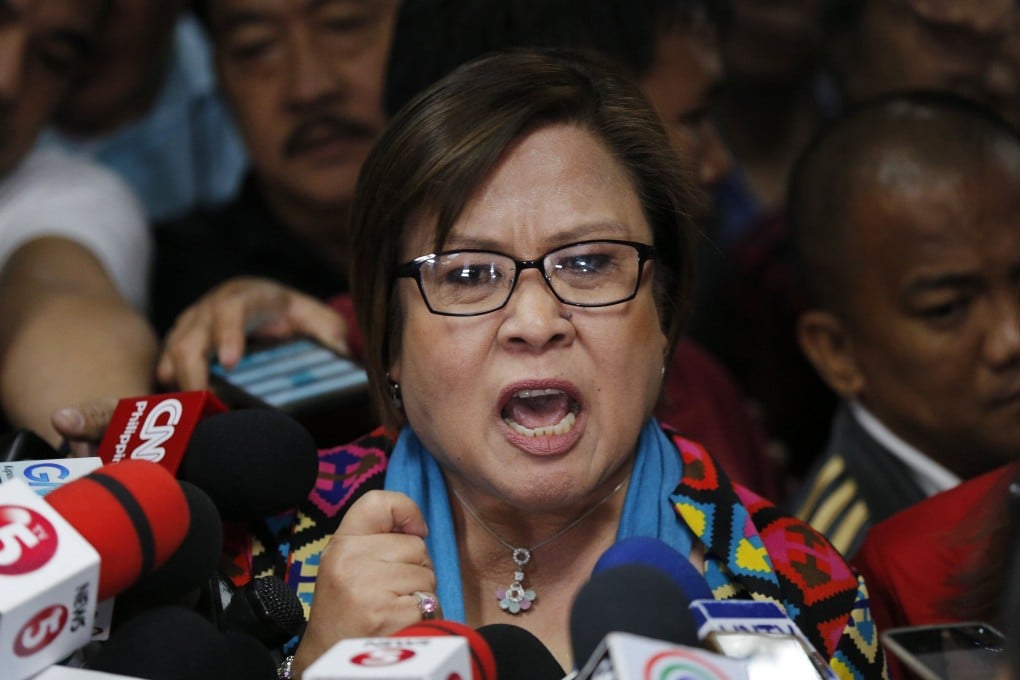
A LEGAL CAREER FORGED BY PRINCIPLE
De Lima’s early professional years were shaped by discipline and exposure to the highest levels of the judiciary. She worked as a staff member at the Supreme Court, taught law, and practiced privately—experiences that strengthened her legal foundation and sharpened her sense of justice.
Her call to public service came in 2008, when she was appointed Chairperson of the Commission on Human Rights (CHR) under President Gloria Macapagal-Arroyo. In this role, De Lima confronted some of the country’s most sensitive and dangerous issues, including allegations of death squads in Davao City, where Rodrigo Duterte was then mayor.
These investigations would later prove pivotal—not only in shaping her reputation as a fearless human rights defender, but also in setting the stage for the political conflict that would change her life.
FROM JUSTICE SECRETARY TO SENATE FIREBRAND
In 2010, President Benigno Aquino III appointed De Lima as Secretary of Justice. At the Department of Justice (DOJ), she became known for her anti-corruption campaigns, prison reforms, and institutional strengthening of the justice system. Her tenure reinforced her image as a principled and uncompromising official—but also earned her powerful enemies.
In 2016, De Lima was elected Senator of the Philippines under the Daang Matuwid coalition. Almost immediately, she used her Senate platform to investigate the extrajudicial killings (EJKs) linked to President Duterte’s war on drugs.
That move marked the beginning of an open and bitter political war.
A FALL MANY CALLED POLITICAL
Later in 2016, De Lima became the target of explosive allegations. She was accused of maintaining a romantic relationship with her former driver and bodyguard, Ronnie Dayan, and of allegedly using that relationship to collect drug money from syndicates inside New Bilibid Prison.
De Lima vehemently denied the criminal accusations, calling them politically motivated fabrications designed to silence her. In February 24, 2017, she was arrested and detained at the PNP Custodial Center in Camp Crame, Quezon City.
Her imprisonment quickly became one of the most controversial political detentions in modern Philippine history.
PRISONER OF CONSCIENCE
International human rights organizations, including Amnesty International, declared De Lima a “prisoner of conscience,” asserting that her detention was meant to neutralize one of the strongest critics of Duterte’s drug war.
Despite years behind bars, De Lima refused to be broken. From her cell, she released statements, wrote handwritten notes, and continued to speak out against human rights abuses and authoritarian practices.
In a striking display of compassion, she even rescued and cared for stray cats inside detention, later adopting them—small acts that symbolized resilience amid isolation.
THE PERSONAL SCANDAL AND THE TRUTH THAT FOLLOWED
One of the most sensational aspects of her case involved allegations of an intimate video connected to her relationship with Ronnie Dayan. De Lima later openly admitted that they had been in a seven-year romantic relationship, insisting that her personal life had no connection to criminal activity.
In a dramatic turn, Dayan himself later testified in court that his earlier statements were made under coercion, and that he had no direct involvement in drug transactions.
ACQUITTAL, FREEDOM, AND REDEMPTION
 After nearly seven years of detention, the legal narrative shifted. In November 2023, De Lima was granted bail. By July 2024, the final drug charge against her was dismissed due to lack of evidence and the retraction of key testimonies.
In 2025, the Muntinlupa Regional Trial Court formally acquitted both De Lima and Ronnie Dayan, affirming that the evidence was insufficient to prove any criminal wrongdoing.
A RETURN TO POWER
De Lima’s story did not end with freedom. In 2025, she made a stunning political comeback, winning a seat as Representative of the Mamamayang Liberal Party-list in the 20th Congress. She was later appointed Deputy Minority Leader, once again taking an active role in legislative oversight and justice reform.
She also filed complaints against prosecutors involved in what she described as manufactured cases, and continued supporting International Criminal Court (ICC) investigations into the Philippine drug war.
News

Wedding Cake ni Carla Abellana, Tinutukso ng Meme ni Janus del Prado at Netizens! Paano Tinugon ng Bagong Kasal ang Hugis ‘Kabaong’ na Isyu at Bakit Sinasabing ‘Para Sa Amin, Maganda Siya’—Alamin ang Lahat ng Dramatikong Reaksyon sa Social Media
Walang makakapigil sa kasiyahan ng bagong kasal na si Carla Abellana kasama ang kanyang high school sweetheart na si Dr. Reginald Santos. Ngunit kamakailan lamang, ang simpleng detalye ng kanilang kasal—ang wedding cake—ay naging sentro ng online drama at tawanan….

Babala sa 2026: Alleged Masamang Plano at Political Intrigue sa Kongreso! Paano Sinusubukang Patalsikin ang House Speaker at Bakit Pinangangambahan ng Publiko ang Impeachment ng VP Sarah Duterte—Alamin ang Buong Detalye ng Matinding Labanan sa Likod ng Kulungan at Opisina ng Gobyerno
Ngayong bagong taon ng 2026, nagkakaroon na naman ng matinding ingay sa politika sa Pilipinas. Maraming netizens at political observers ang nag-aalala matapos lumabas ang mga ulat tungkol sa umano’y masamang plano para sa ilang pangunahing opisyal ng gobyerno. Isa…

BTS Bumabalik sa 2026! PHILIPPINES Kasama sa Listahan ng World Tour—Magkakaroon ng Eksklusibong Concert sa Manila! Alamin Kung Paano Naghanda ang ARMY Para sa Pinakahihintay na Comeback ng K-pop Supergroup sa Bagong Taon at Bakit Excited ang Bawat Pinoy Fan!”
Pilipinas, maghanda na! Ang pinakamalaking K-pop phenomenon sa mundo, ang BTS, ay opisyal nang nagbigay ng pahiwatig ng kanilang comeback ngayong 2026, at kasama sa kanilang world tour ang ating bansa. Isang pangyayaring nagpasabog sa social media at nagpaiyak sa…

Serena Dalrymple: Mula sa Sikat na Commercial at Mga Premyadong Pelikula Hanggang sa Buhay na Binaraha ng Pagkawala ng Mga Magulang Nang Maaga, At Pag-aalaga sa Kanyang Mga Kapatid—Ngunit Ang Tunay na Nakatulong Sa Kanya Upang Malampasan ang Lahat ng Pagsubok, Magtagumpay, at Matagpuan ang Kaligayahan Bilang Isang Ina at Asawa ay May Lihim na Hindi Pa Alam ng Nakararami… Tuklasin sa Link sa Comments…
Si Serena Dalrymple ay isang pangalan na agad nagpapaalala sa mga Pilipino ng dekada 90 at maagang 2000s – isang batang artista na sumikat dahil sa kanyang mga makukulay na commercial at mga pelikulang pinapurihan ng mga kritiko. Ngunit sa…

Chris Aquino Ginulat ang Lahat Nang Magbahagi ng Nakakabigla at Nakakalungkot na Update Tungkol sa Kalagayan ng Kanyang Anak Bimbe—Paano Na Nga Ba ang Kanilang Mag-iina? Alamin ang Buong Detalye na Nagpaiyak at Nagpagulantang sa Buong Publiko!
Muling nabigla ang publiko nang magbahagi ng isang emosyonal at nakakaantig na post sa Instagram si Chris Aquino noong December 29, 2025. Sa kabila ng mga masasayang larawan na madalas niyang ibahagi sa social media, ngayon ay ibang-iba ang tono….

Three Generations of Exorcists Lived in Poverty: In My Generation, I Use SCIENCE to Catch Ghosts
My family has been in the spiritual cleansing business for three generations. My grandfather was a celestial master, living a pure life. After exorcising spirits, he only accepted two sweet potatoes as a token of gratitude.By the end of his…
End of content
No more pages to load