Rumors, Silence, and Power: Why Talk of Duterte’s Possible Freedom Has Reignited a National Reckoning
In recent days, a familiar name has once again surged to the center of public attention. As unverified claims about a possible easing of international legal pressure on former Philippine president Rodrigo Duterte began circulating online, the reaction was immediate and intense. Supporters expressed guarded optimism, critics responded with alarm, and many ordinary citizens were left asking the same question: Is something truly changing, or is this simply another cycle of speculation?
The rumors, though lacking official confirmation, have exposed something deeper than curiosity about a single individual’s fate. They have reopened unresolved debates about justice, accountability, sovereignty, and the long shadow cast by powerful political figures long after they leave office.
How Speculation Became a National Conversation
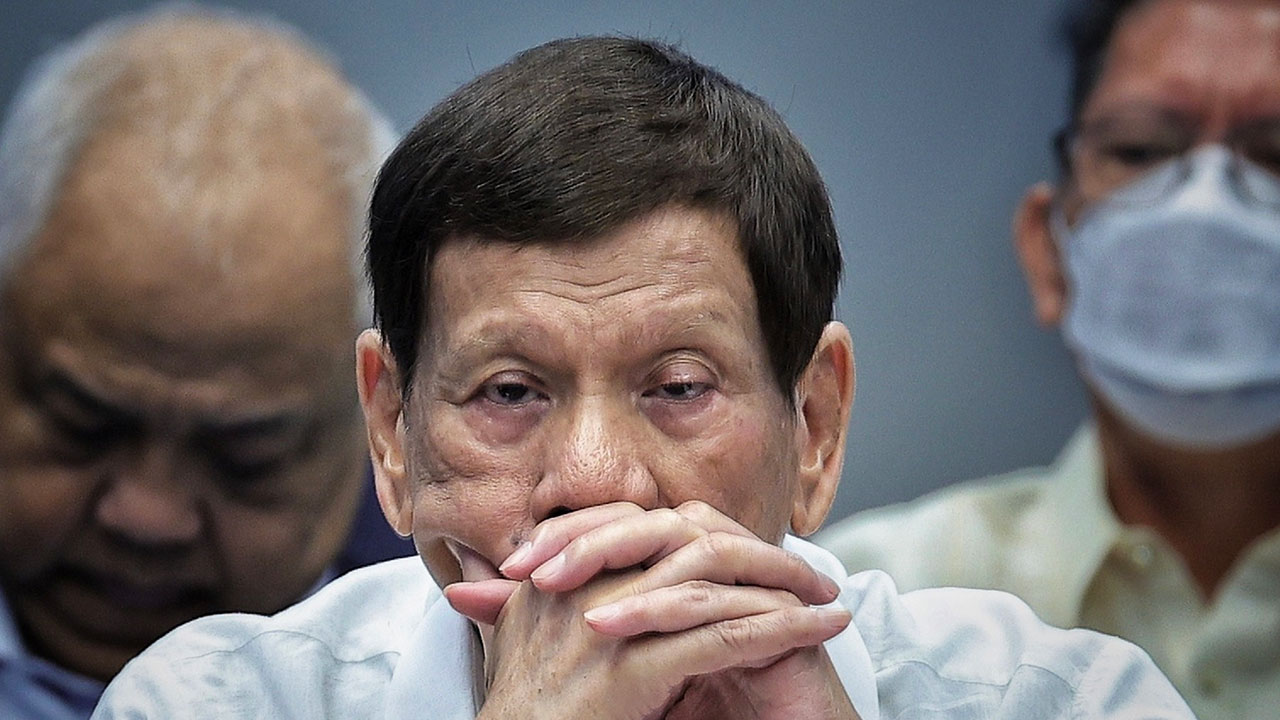
The renewed discussion did not begin with a formal announcement or legal filing. Instead, it emerged from fragmented online commentary—posts, screenshots, and secondhand claims suggesting that Duterte, often referred to as FPRRD, might soon see relief from the legal scrutiny associated with the International Criminal Court (ICC). Within hours, the idea spread across platforms, amplified by political influencers and partisan communities.
In today’s media environment, such momentum is not unusual. Information no longer waits for validation before reaching mass audiences. In politically sensitive contexts, the mere possibility of change can take on a life of its own, especially when it touches unresolved national wounds.
The Power of Silence in High-Stakes Legal Cases
What fueled the speculation further was not what was said, but what was not. The ICC, known for its deliberate and tightly controlled communication style, has offered no sweeping clarification addressing the rumors directly. For some observers, this silence is routine—an expected feature of ongoing legal review. For others, it is interpreted as meaningful ambiguity.
This tension highlights a recurring challenge in international justice: procedural restraint can easily be mistaken for indecision, or worse, quiet retreat. In the absence of clear statements, people fill the gaps with their own assumptions, often shaped by political loyalty or distrust of institutions.
Divided Reactions Reflect an Unfinished National Debate

Public response to the rumors has been sharply polarized. For Duterte’s supporters, the possibility of reduced legal pressure represents vindication—a sign that years of criticism and international scrutiny may have been overstated or politically motivated. Some frame the rumors as evidence that global institutions are rethinking their stance.
On the other side, critics warn that even entertaining such speculation risks normalizing impunity. They argue that accountability for alleged crimes should not be diluted by political popularity or shifting alliances. For them, the rumors trigger fears that justice may once again be delayed—or denied entirely.
Between these extremes lies a large segment of the public that is neither celebrating nor condemning, but questioning. Their concern is less about loyalty to a figure and more about confidence in institutions, both domestic and international.
Understanding Why Clarity Takes Time
Legal experts caution against reading too much into rumor-driven narratives. International courts like the ICC operate on timelines that are often incompatible with public impatience. Reviews, deliberations, and procedural checks can take months or years, particularly in complex cases involving former heads of state.
Unlike political bodies, courts are not designed to respond to public pressure or viral discourse. Their credibility depends on insulation from such forces. This deliberate pace can feel frustrating, but it is central to the integrity of the process.
Law, Politics, and the Burden of Symbolism
What makes Duterte’s situation especially charged is that it exists at the intersection of law and politics. Any perceived movement—real or imagined—is instantly interpreted as a political signal. Supporters see strategy and strength; critics see compromise and erosion.
This dynamic places an enormous symbolic burden on legal institutions. Decisions are no longer judged solely on legal merit but on what they appear to say about power, influence, and the global order. In such an environment, even procedural silence becomes politicized.
Media Narratives and the Risk of Oversimplification

Media coverage has played a critical role in shaping the current moment. Some outlets emphasize caution, repeatedly reminding audiences that no official confirmation exists. Others focus on emotional reactions, framing the rumors as a dramatic turning point.
While both approaches attract attention, they also carry risks. Sensational framing can create false expectations, while excessive speculation can blur the line between analysis and assumption. For readers, distinguishing fact from interpretation becomes increasingly difficult.
Why This Moment Matters Beyond One Man
Regardless of whether the rumors prove unfounded or foreshadow real developments, their impact is already visible. They have reignited national conversations about the rule of law, the reach of international justice, and the accountability of powerful leaders.
These are not questions that disappear with a single court ruling. They reflect ongoing tensions in democratic societies: how to balance sovereignty with global norms, how to pursue justice without politicization, and how to maintain public trust when legal processes are slow and opaque.
Calls for Caution in an Age of Instant Judgment
Amid the noise, a growing number of voices are urging restraint. Legal scholars, journalists, and civil society groups emphasize the importance of waiting for verified information. They warn against “trial by rumor,” where narratives harden before facts emerge.
This call for patience is not a defense of any individual. Rather, it is a defense of process—the idea that truth and accountability require time, evidence, and procedural fairness.
What Comes Next
For now, the situation remains unresolved. No formal announcements have confirmed a shift in Duterte’s legal standing. No clear timelines have been presented. Until such developments occur, speculation will likely continue, driven by political interest and public curiosity.
Observers will be watching closely for official statements, documented procedural steps, or clarified positions from the ICC. Any concrete update will immediately recalibrate the conversation.
Conclusion: Between Rumor and Reality
The resurgence of discussion around Duterte’s possible legal future illustrates how quickly rumor can evolve into national debate. It also reveals how deeply personal and political unresolved questions of justice remain for many Filipinos.
In the absence of confirmed facts, the challenge is not to choose sides, but to remain grounded. History shows that clarity does not emerge from speculation, but from process. Until that process speaks clearly, uncertainty will continue to dominate the conversation.
What ultimately matters is not how loudly rumors spread, but how firmly truth is established. In cases that test the boundaries between power and accountability, patience may be the most difficult—and most necessary—response.