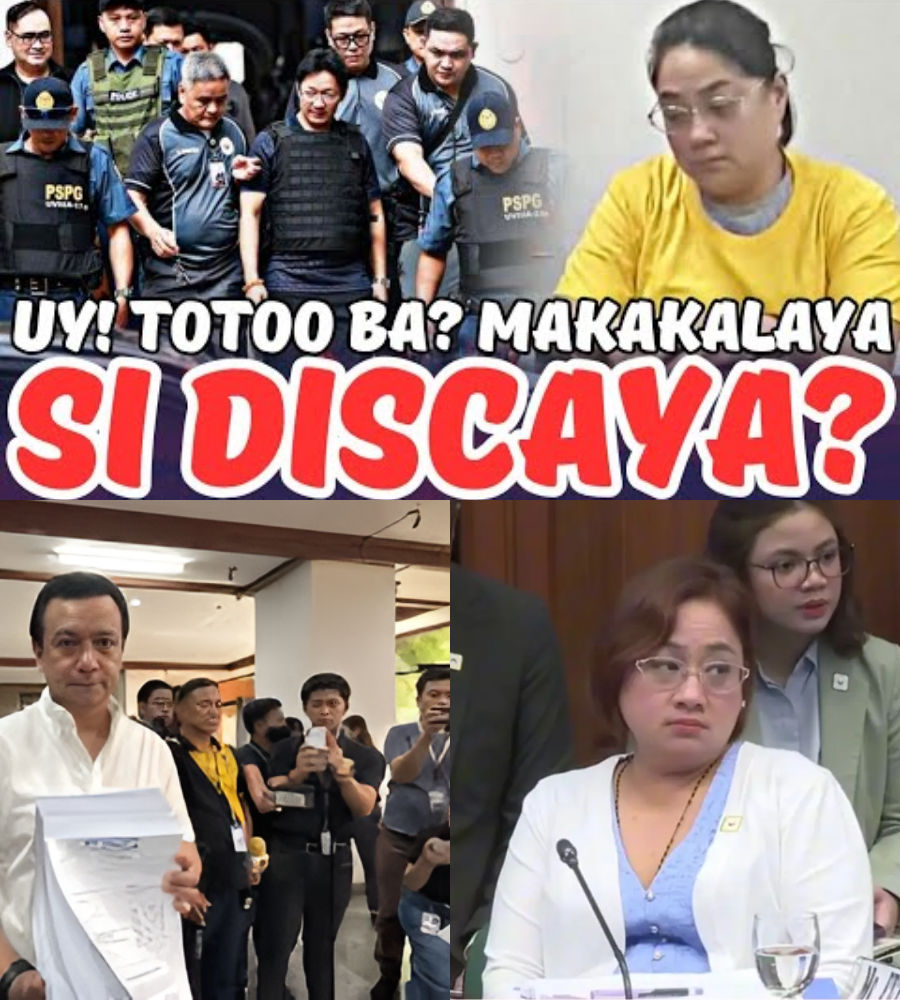
“Is Freedom a Lie—or a Trap?”As Sarah Discaya remains jailed, fragments of evidence quietly surface: an unregistered phone, erased messages, and a witness who suddenly recanted. Trillanes hints that naming just one person could unlock everything. Are these clues enough to prove the truth—or deliberately incomplete to bait a much bigger reveal?
Sarah Discaya’s imprisonment was widely seen as the final chapter of a dramatic fall from power—an inevitable reckoning after years of unanswered questions surrounding massive public projects, unexplained wealth, and political proximity. But just as the public began to accept her detention as a closed case, a new and far more explosive narrative has emerged.
This time, the issue is no longer simply whether Discaya will remain behind bars.
The question now is far more dangerous: Can she walk free—if she dares to name who stood behind her?

From Power and Privilege to a Jail Cell
Sarah Discaya is currently detained at the female dormitory of the Lapu-Lapu City Jail in Cebu, facing serious charges connected to a controversial ₱96.5-million flood control project in Davao Occidental that investigators claim existed largely on paper. The case has become emblematic of broader concerns about how large government-funded projects were distributed and implemented during the previous administration.
Once known for openly displaying her wealth—luxury vehicles, high-end properties, and an expansive construction empire—Discaya now finds herself stripped of the very power that once protected her. Ironically, it was her own public interviews, particularly during her failed mayoral bid in Pasig, that drew unprecedented scrutiny to her finances.
What was meant to project strength and success instead exposed cracks that investigators would later pry wide open.
Trillanes’ Warning: “There Is Only One Way Out”
The political tension escalated dramatically after former Senator Antonio Trillanes made a public and pointed statement that sent shockwaves through both legal and political circles.
According to Trillanes, Discaya allegedly secured up to ₱200 billion worth of government projects, particularly after 2016—an amount he insists could not have been possible without powerful backing.
His message was blunt and unmistakable:
“If she wants a chance at freedom, she must reveal who backed her during the Duterte administration.”
The statement instantly polarized public opinion. Supporters of transparency hailed it as a rare opportunity to expose deeper networks of influence. Critics, however, warned that allowing someone to negotiate freedom through accusations could undermine accountability.
Can Naming Names Really Change Her Fate?
In legal terms, cooperation with authorities—often referred to as becoming a state witness—is not unprecedented. However, legal experts stress that such a path is neither automatic nor guaranteed.
For Discaya to even be considered for leniency, she would need to provide:
Verifiable and substantial evidence
Full cooperation with investigators
A willingness to return assets deemed questionable
So far, there has been no indication that Discaya is prepared to take that step. Local officials, including Pasig Mayor Vico Sotto, have openly stated that they have seen no signs of cooperation or remorse—a factor that significantly weakens any potential plea for clemency.
Silence as Strategy—or Fear?
One of the most persistent theories surrounding Discaya’s refusal to speak is fear.
Naming a “backer” is not merely a legal maneuver—it is a political act with consequences that extend far beyond the courtroom. Those who believe Discaya knows more than she is saying argue that her silence suggests the presence of figures far more powerful than herself.
In this context, silence may not be defiance—but self-preservation.
Political analysts note that exposing high-level connections could place Discaya in far greater danger than remaining incarcerated. The cost of speaking, some argue, may simply be too high.
A Fall Made More Painful by Public Memory
The contrast between Discaya’s past and present is impossible to ignore. Once confident enough to boast about luxury vehicles and billion-peso contracts, she now faces the slow grind of the justice system—without the privileges she once enjoyed.
When Discaya publicly asked what would happen to her children, the response from Pasig Mayor Vico Sotto was swift and unsparing:
“That should have been considered before all of this happened.”
For many Filipinos, the statement resonated as more than political rhetoric. It reflected a growing public sentiment that accountability must come before sympathy.
A Nation Watches—and Waits
At present, there is no concrete sign that Discaya will cooperate with authorities or follow Trillanes’ advice. Whether she remains silent out of strategy, fear, or defiance remains unclear.
What is clear is this: her case is no longer just about one individual. It has become a symbol of a larger struggle—between silence and truth, power and accountability, loyalty and survival.
If Discaya ever chooses to speak, the consequences could extend far beyond her own freedom. It could reopen unresolved questions about an entire era of governance—and expose relationships many believe were never meant to be seen.
Until then, the prison gates remain closed.
But behind those walls, a single decision—one name spoken aloud—could still change everything.