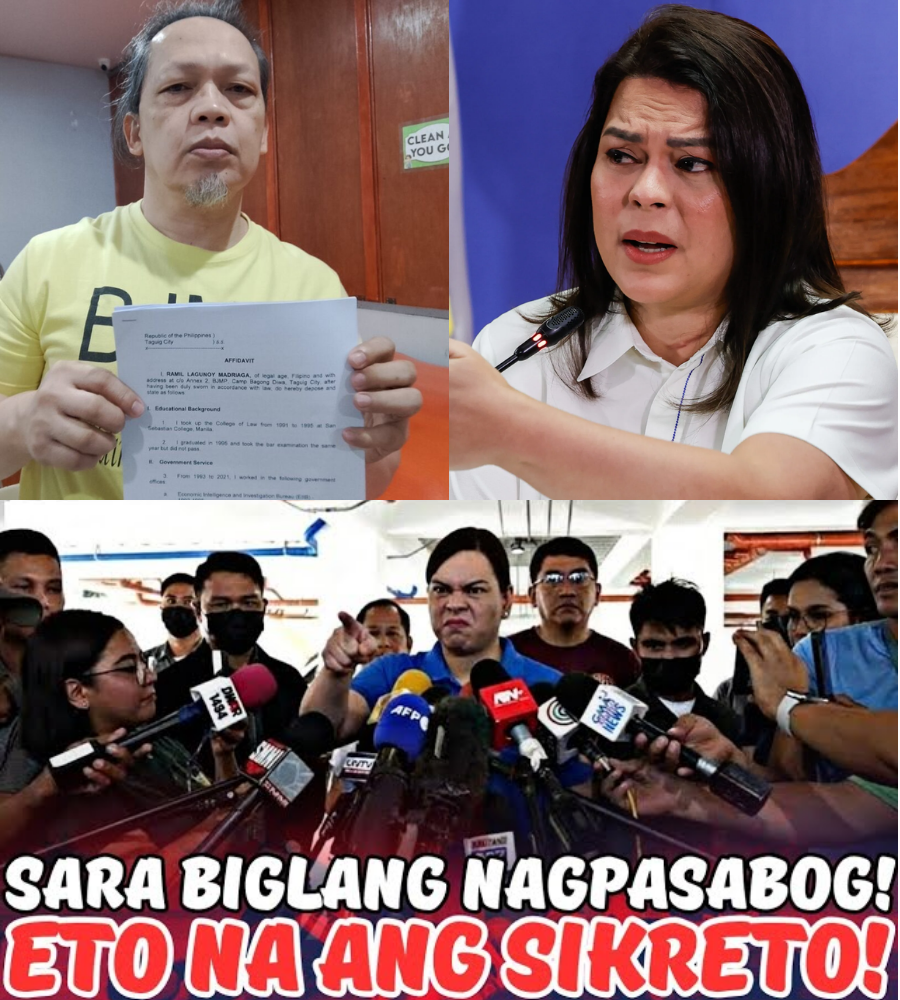
“I Have Nothing to Do With Him”—or Do I? As Vice President Sara Duterte finally breaks her silence, a detained insider drops bombshell claims of secret late-night meetings, hidden phones, erased messages, and evidence allegedly locked away. What is being concealed, who is protecting whom, and could a single revelation redraw the country’s political future?
For the first time since the controversy erupted, Vice President Sara Duterte has spoken.
After weeks of speculation, leaks, and whispered accusations, the country woke up to a rare and carefully worded public denial—one that instantly reignited debate, sharpened political divisions, and placed the spotlight squarely on a detained man whose claims are now shaking the foundations of power.
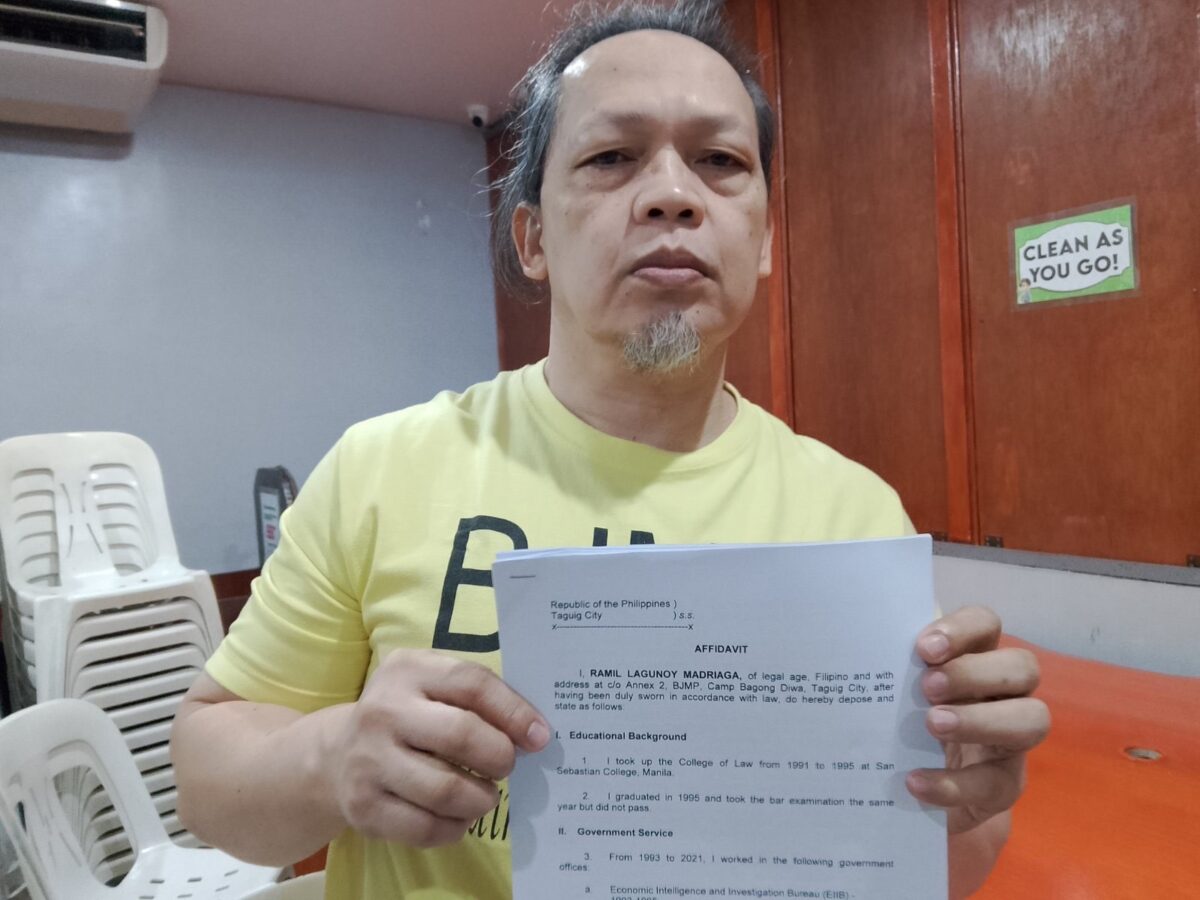
At the center of the storm is Ramil Lagunoy Madriaga, a former figure reportedly connected to the Office of the Vice President, now behind bars on a serious criminal charge. From detention, Madriaga has made allegations so grave that they have transformed a personal legal case into a national political flashpoint.
And now, Vice President Sara Duterte says: “I have no personal relationship with him.”
A Sudden Silence Broken
For months, critics questioned why the Vice President had remained silent while Madriaga’s name circulated online, tied to claims of secret coordination, financial irregularities, and hidden evidence. Until now, there had been no direct response—only speculation.
That changed when the Office of the Vice President released an official statement categorically denying any personal connection, instruction, or coordination with Madriaga. According to the statement, the Vice President never visited him in detention, never communicated with him privately, and never authorized any activities attributed to her.
The denial was firm—but it did not end the controversy. Instead, it escalated it.
Who Is Ramil Madriaga?
Madriaga is no ordinary detainee. In sworn statements and interviews through his legal counsel, he has claimed to be a former security and intelligence-linked figure associated with the Duterte political circle during Sara Duterte’s tenure as mayor of Davao City.
He alleges that he played a role in political organizing beginning in 2020, allegedly in preparation for a national campaign. He further claims to possess three mobile phones currently held by the court, which he insists contain messages, call records, and transaction data that could corroborate his statements.
His lawyer, Attorney Raymond Palad, has repeatedly called for these devices to be formally examined.
“This is where the truth will be proven,” Madriaga has reportedly stated through counsel.
The Alleged Visits That Fueled Suspicion
One of the most explosive claims involves alleged late-night visits to the detention facility at BJMP Bicutan in Taguig City.
According to Madriaga’s camp, the Vice President herself visited him on two occasions—once accompanied by others, and once allegedly attempting a private conversation. Madriaga claims he declined the second meeting, citing distrust of the intentions behind it.
The Vice President’s office has flatly denied these allegations, stating that no such visits occurred and that any photographs presented by Madriaga were taken during public events, not private meetings.
The dispute now hinges on evidence: timestamps, visitor logs, phone records, and documentation that could confirm or dismantle these claims.
Desperation or Disclosure?

Vice President Duterte has suggested that Madriaga’s allegations are acts of desperation—an attempt to secure release or leniency by manufacturing a narrative that targets a high-ranking official.
“He is spreading false information to damage my name and potential political future,” the Vice President’s statement emphasized.
Yet Madriaga’s camp counters that desperation does not produce sworn affidavits, named witnesses, and physical devices now under court custody. They insist the evidence speaks for itself—once authorities choose to examine it.
A Legal Battle With Political Consequences
What began as a criminal detention case has evolved into a legal and political confrontation with far-reaching implications.
If Madriaga’s claims are substantiated, they could raise serious questions about accountability, campaign operations, and ethical conduct. If proven false, they may reinforce arguments about misinformation, political sabotage, and abuse of the legal system.
At present, no court has ruled on the credibility of Madriaga’s allegations. No charges have been filed against the Vice President. The case remains in a volatile limbo—where public opinion races ahead of judicial process.
The Role of Public Perception
What makes this situation especially combustible is timing.
The Vice President remains one of the most prominent political figures in the country, with constant speculation surrounding her future ambitions. Any unresolved controversy—especially one involving alleged insider testimony—carries consequences beyond the courtroom.
Social media has already become a battleground, with supporters dismissing the claims as fabricated, while critics argue that the existence of detained evidence alone warrants deeper investigation.
Waiting for the Phones to Speak
At the heart of everything are three mobile phones—locked, held, and waiting.
To Madriaga’s supporters, they represent truth delayed.
To the Vice President’s camp, they are irrelevant devices attached to a false narrative.
Until authorities decide whether to extract and authenticate their contents, the country remains suspended between denial and accusation.
A Nation Watching Closely
Vice President Sara Duterte has spoken—but the questions remain.
Was this a necessary denial, or merely the opening act of a much larger legal drama? Is Madriaga a disgruntled detainee seeking leverage, or a whistleblower holding proof that could reshape political accountability?
For now, the truth has not been decided in court—but it is already being debated in every corner of the public sphere.
And as the Vice President and her accuser stand on opposite sides of a widening divide, one thing is certain:
This story is far from over.