Not an Accident, Not a Coincidence: Inside the Final Hours of Former Undersecretary Cabral—A Death Wrapped in Silence, Vanishing Evidence, Altered Timelines, and Locked Doors. Who was with him last? Why did key records disappear? And which powerful interests are desperate to keep the truth buried as investigators follow a trail that only grows darker?
At first glance, it looked like a tragic accident—one of those unfortunate incidents that happen on dangerous roads in the dead of night. A fall, a steep ravine, darkness, and silence. But as investigators began piecing together the timeline, statements, movements, and evidence surrounding the final hours of former Undersecretary Cabral, the narrative slowly unraveled. What initially appeared simple became disturbingly complex.
In recent days, the case of former Usec. Cabral has dominated public discussion, not merely because of where his body was found, but because of the growing number of details that seem inconsistent, unresolved, or deeply troubling. Each new revelation has only intensified the sense that something about this story does not add up.
A Road Known for Danger—and Questions
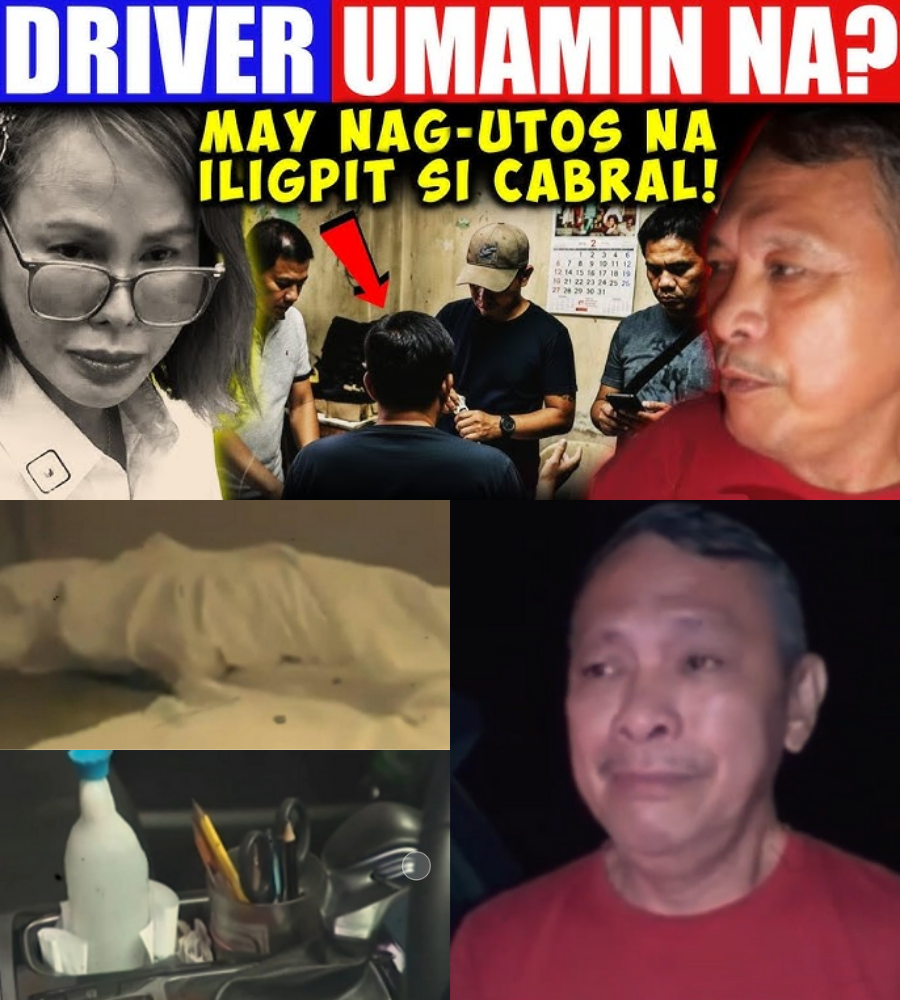
Cabral was last seen alive on Cannon Road, a stretch infamous for its steep cliffs and high-risk conditions, especially at night. According to official accounts, he was accompanied only by his driver. That fact alone has placed the driver at the center of scrutiny—not as an accused, but as a person of interest, given that he was the last known individual to be with Cabral.
The driver stated that he repeatedly warned Cabral not to sit on the concrete guard rail due to the risk of falling. Cabral, according to this account, ignored the warnings. Shortly after, police allegedly instructed them to leave the area. They complied and proceeded to a hotel, checking in at approximately 2:30 a.m.
This is where the story begins to feel unusual.
If they had already left a dangerous location late at night, why return?
The Decision That Changed Everything
The driver claims that around 3:00 a.m., Cabral insisted on going back to Cannon Road. Upon arrival, Cabral allegedly exited the vehicle and once again sat on the guard rail. The driver said he checked on him and confirmed that Cabral was still there.
Then came a decision that continues to puzzle investigators and the public alike.
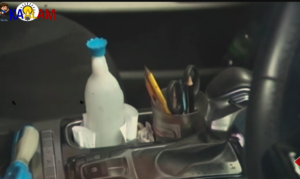
Cabral reportedly told the driver to leave him temporarily and return later. The driver complied—leaving Cabral alone in a dark, isolated area, with minimal foot traffic, late at night. Notably, Cabral’s bag and mobile phone were still inside the vehicle.
To many observers, this moment represents a critical break in logic. Leaving a senior official alone in such a location under these circumstances raises serious concerns.
The Search and Discovery
 Nearly an hour later, the driver returned. Cabral was gone. According to the driver, he searched the area but hesitated to approach the edge of the ravine out of fear for his own safety. He reportedly asked nearby individuals but found no trace of Cabral.
He returned to the hotel, hoping Cabral might have made his way back independently. He had not.
It was only after 5:00 a.m. that the driver returned to Cannon Road and sought police assistance. With proper lighting and coordinated efforts, Cabral’s body was eventually discovered down the ravine.
Evidence, Electronics, and a Larger Context
Authorities have emphasized that all available evidence—physical, forensic, and electronic—is being carefully examined. Digital devices, movement records, and timelines are now crucial components of the investigation.
What further complicates the case are persistent claims circulating online and in political circles: that Cabral may have been in possession of a computer containing sensitive documents. Allegedly, these files involved project records, fund allocations, and names tied to large-scale government expenditures.
No official confirmation has been made. Yet the mere possibility has fueled speculation.
Who would benefit if such information never surfaced?
Political Undercurrents and Public Suspicion
Adding fuel to the fire are broader discussions about massive funding allocations in certain regions—particularly reports that a single district in Davao allegedly received billions of pesos in project funds during previous years. At the same time, other provinces struggled to secure budgets for basic infrastructure.
Questions have also resurfaced about controversial projects in Baguio, including those related to slope protection and rock netting. The freezing of assets linked to individuals allegedly connected to these projects has only intensified public curiosity.
Some lawmakers have gone on record saying that the entire situation “doesn’t smell right,” suggesting that when viewed as a whole, the events surrounding Cabral’s death may point to something beyond coincidence.
Fear, Silence, and Timing

Another detail frequently raised by the public is Cabral’s reported fear of heights. Old videos and testimonies have resurfaced suggesting he was uncomfortable near cliffs or elevated areas. If true, many ask: why would he willingly return to a dangerous ravine in the middle of the night?
Why insist on being left alone there?
Why do critical moments rely solely on one person’s account?
These unanswered questions have made it difficult for the public to accept the explanation of a simple accident without reservation.
The Call for Truth Over Assumptions
Authorities continue to urge caution. Speculation, they remind, is not evidence. At this stage, no conclusions have been officially drawn beyond what has been verified. Investigations remain ongoing, and every angle—personal, professional, political—is reportedly being reviewed.
What is clear, however, is that this case has evolved into a complex puzzle. Each new piece of information introduces another layer of uncertainty rather than closure.
A Case That Refuses to Fade
For many Filipinos, the story of Usec. Cabral is no longer just about a tragic death. It has become a symbol of larger concerns: transparency, accountability, and the fear that some truths remain buried not by accident, but by design.
As the investigation continues, the public is left with one pressing question:
Do we accept the first story we are told—or do we wait until every piece of the truth, no matter how uncomfortable, finally comes to light?
The answer may define not only this case, but the public’s trust in the system itself.