National Tragedy — Shock Waves Ripple Across the Country as Long-Hidden Dashcam Footage Finally Surfaces, Igniting Explosive Questions About the True Fate of Usec. Catalina Cabral: Did the Camera Capture the Truth, or Only Carefully Selected Fragments? Shadows Shift, Timelines Collide, and One Haunting Question Refuses to Fade
Even now, the Philippine public remains deeply unsettled by the mysterious circumstances surrounding the death of former DPWH Undersecretary Maria Catalina “Katy” Cabral. Instead of clarity, each passing day brings new footage, new testimonies, and new contradictions—turning what was initially described as a tragic accident into a case that continues to haunt the national conscience.
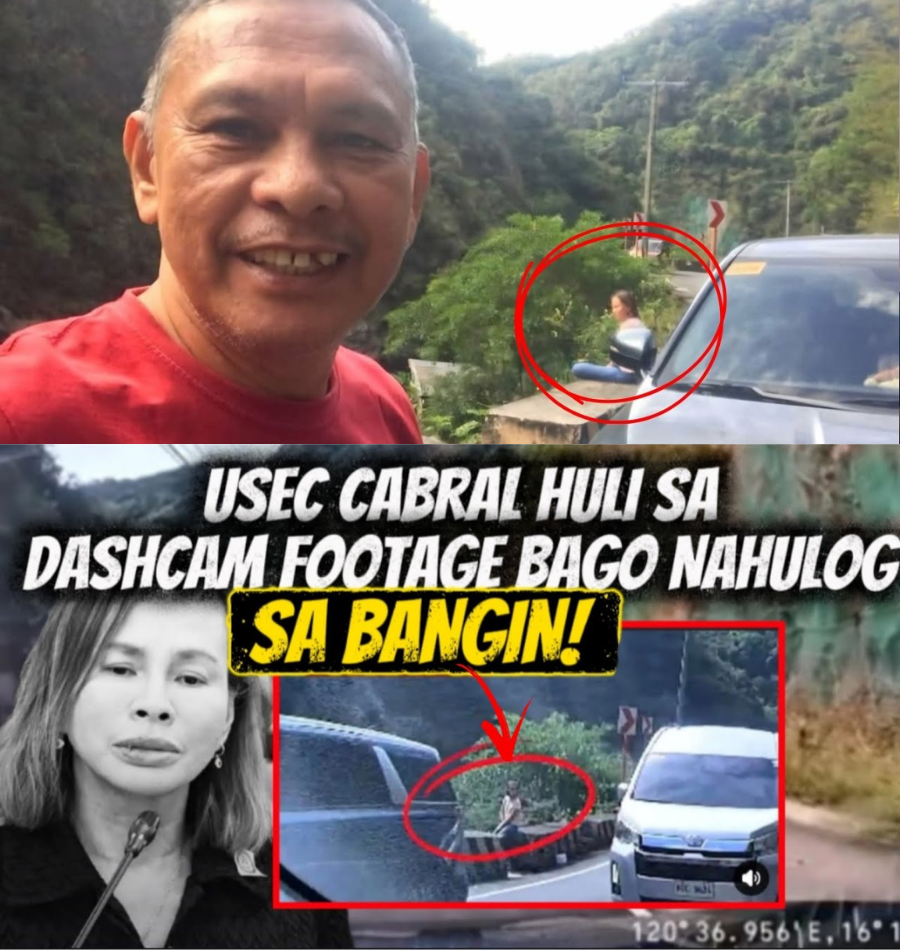
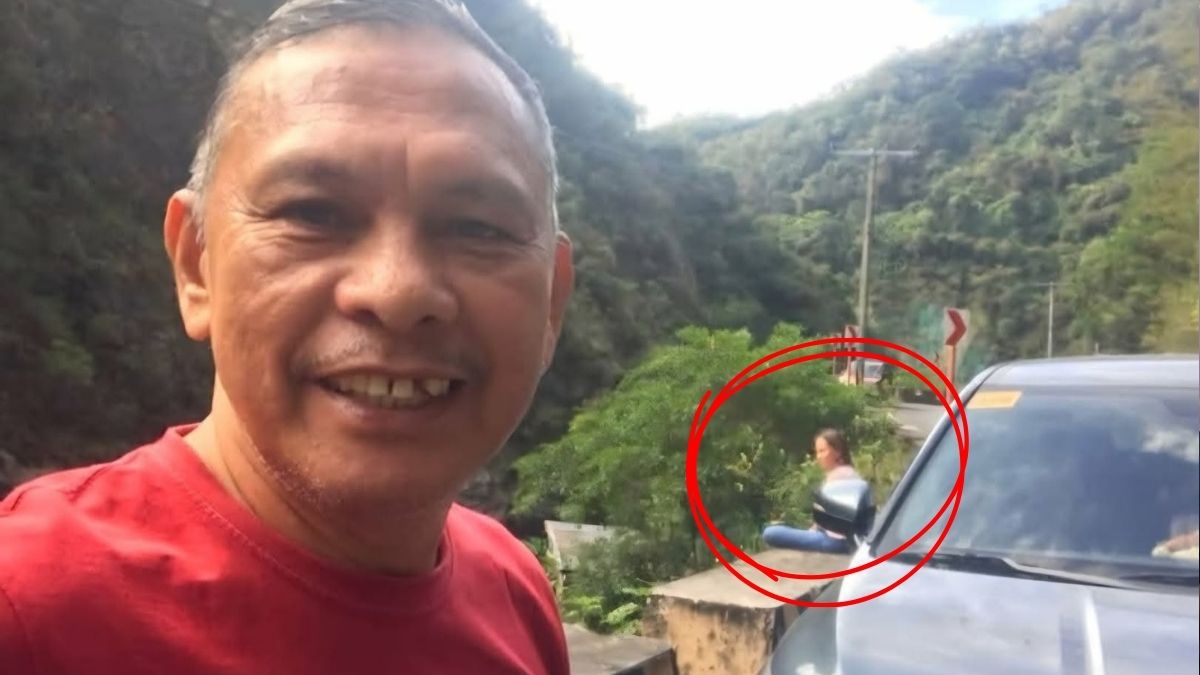
The latest source of controversy is a dashcam video that recently went viral on social media and was later circulated by news outlets. According to the post, the footage was recorded at around 10:15 a.m. on December 18 along Canon Road in Barangay Camp 4, Tuba, Benguet. The video allegedly shows a woman believed to be Catalina Cabral sitting on a concrete road barrier, dangerously close to the edge of a steep ravine.
Yet almost immediately, doubts erupted.
“She doesn’t look like her.”
“The posture feels wrong.”
“The clothing doesn’t match her usual appearance.”
These reactions flooded comment sections within hours. Some netizens went further, describing the figure in the footage as strangely distant and indistinct, almost unreal—“like a shadow,” as one commenter put it. Others questioned whether the video truly captured Cabral at all.
A Dangerous Location and a Known Fear of Heights
What intensified the public’s suspicion was the location itself. Canon Road is widely known as a perilous stretch, with steep drops and minimal protection. Many questioned why a high-ranking official, especially someone known to be cautious, would choose to sit alone on a concrete barrier at such a spot.
This doubt deepened when past interviews and accounts resurfaced, revealing that Cabral reportedly had a fear of heights. Observers asked a chilling question:
Would a person with acrophobia voluntarily sit inches away from a ravine, simply “to get some fresh air”?
Or was she placed there?
Some viewers speculated that the footage might not show a moment of rest, but the aftermath of something unseen—or worse, the final seconds before an irreversible act carried out by someone else.
Conflicting Timelines and Lingering Inconsistencies
The dashcam clip also raised questions about the timeline. According to official statements, Cabral was last seen with her driver in the afternoon. Yet this footage allegedly shows her alone in the morning. Who was she with before and after that moment? Why is there no continuous visual record, despite the area being frequented by passing vehicles?
Critics argue that the release of a single, isolated clip only fuels speculation rather than resolving it. Why was this footage shown now? Were there other angles? Other recordings? And if so, why have they not been made public?
As one commentator remarked,
“If transparency is the goal, why does it feel like we’re only being shown what’s convenient?”
Statements That Add to the Confusion
Further unsettling the public was a statement attributed to Justice Secretary Jesus Crispin Remulla, who was quoted as saying:
“Death will not protect you. Greater shame will fall upon your family. Face the accusations against you.”
The remark, delivered in the context of accountability and corruption allegations, struck many as unusual—especially when applied to someone officially declared dead. This prompted an uncomfortable question echoed across social media:
If the case is already closed, why speak as if accountability is still being pursued against Cabral herself?
Some netizens interpreted this as a sign that even authorities are not fully convinced the story has ended.
A Pattern Too Familiar to Ignore
The Cabral case has also reignited memories of other controversial deaths involving engineers and officials connected to DPWH projects. In Ilocos, in Sorsogon, and in other regions, fatalities were similarly ruled “accidental,” only to be followed by public skepticism and unanswered questions.
This perceived pattern has led many to ask whether Cabral’s death is an isolated tragedy—or part of a broader, darker narrative involving infrastructure projects, corruption, and silenced insiders.
The question now circulating online is blunt and unsettling:
Who benefits from Cabral’s silence?
Personal Accounts Paint a Different Picture
Those who claim to have known Cabral personally describe her as soft-spoken, professional, and far from reckless. While acknowledging that corruption is systemic and that she operated within a flawed system, they insist she was not the type to act impulsively or put herself in obvious danger.
“She wasn’t confrontational. She wasn’t reckless. She understood the system—and that’s exactly why she was dangerous to some people,” one acquaintance wrote.
Others suggest that if Cabral had truly feared legal consequences, surrendering or cooperating would have been more consistent with her character than a sudden, unexplained fall.
An Open Wound for the Nation
As the debate rages on, one thing is clear: the dashcam footage has not brought closure. Instead, it has reopened wounds, intensified suspicion, and deepened public distrust.
Was the video a genuine glimpse into Cabral’s final moments—or merely a fragment released to steer the narrative?
Was she alone by choice—or isolated by design?
And most disturbingly: was this truly an accident, or the silencing of someone who knew too much?
Until all evidence is laid bare—until timelines align and questions are answered—the case of Catalina Cabral will remain more than a tragedy. It will stand as a symbol of a nation still searching for truth in the shadows of power, corruption, and silence.
For now, the public watches, waits, and asks the same question again and again:
What are they not telling us?