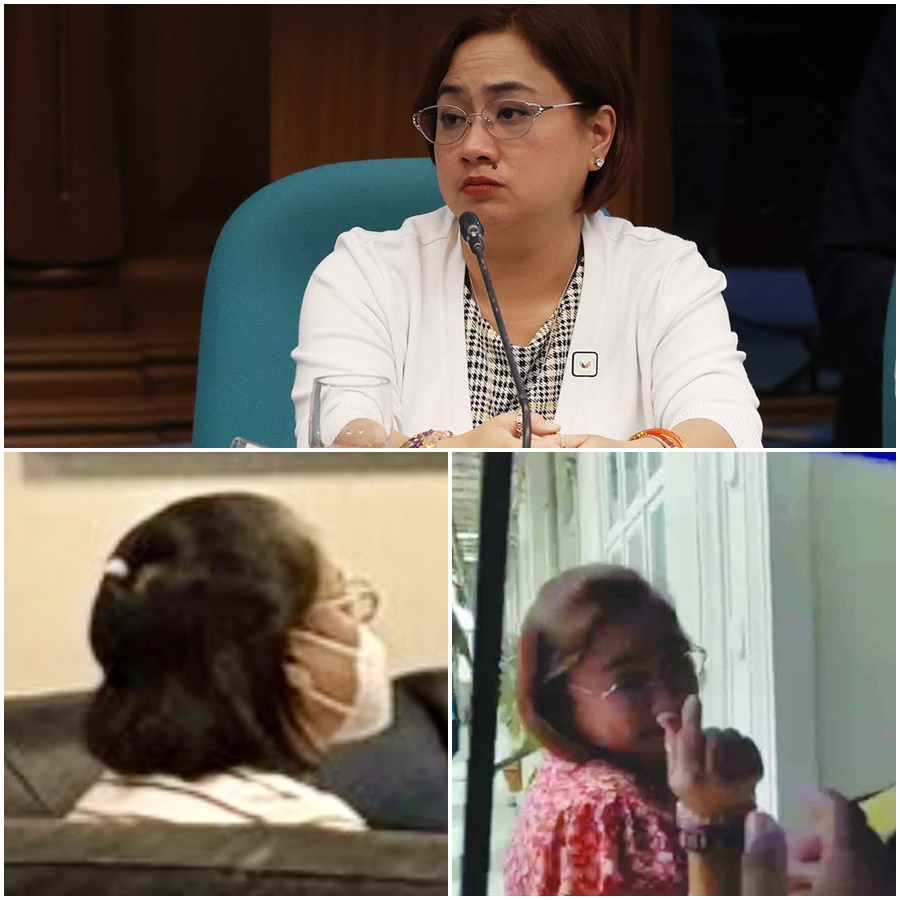
Drama erupts — Sarah Discaya shocks everyone as she suddenly shows up at the NBI while an arrest warrant looms over her, raising chilling questions 😱 Was this a bold move or a desperate act? What are they hiding behind the scenes, and why did her appearance trigger such intense reactions? Coincidence or secret? Every step she took, every word left unsaid fueled even deeper mystery — nothing is as simple as it seems. Details that change everything — keep reading.
THE $96.5 MILLION GHOST PROJECT: SARAH DISCAYA’S PRE-EMPTIVE SURRENDER—IS SHE SAVING HERSELF OR SPILLING GOVERNMENT SECRETS? 🚨💰

THE PRESIDENT’S ULTIMATUM: A RACE AGAINST THE ARREST WARRANT
The flood control scandal, a devastating tale of massive public fund malversation, reached a fever pitch this week as President Ferdinand “Bongbong” Marcos Jr. publicly declared that an arrest warrant for contractor Sarah Discaya was imminent. This unprecedented presidential pressure effectively forced Discaya’s hand, leading to a dramatic, pre-emptive surrender to the National Bureau of Investigation (NBI).
Discaya, co-owner of Alpha and Omega General Contractor & Development Corporation—one of the key firms implicated in securing a staggering 20% of the nation’s flood control projects—walked into the NBI headquarters on Tuesday morning, just hours after the President’s video message made her arrest a matter of national certainty.
The President’s stark warning left no room for evasion:
“We expect the warrant for the arrest of Sarah Discaya this week, and it will not take long before her arrest.”
This high-stakes surrender is not a plea of innocence, but a strategic move by a deeply implicated figure to control the narrative and, potentially, the conditions of her coming confinement. Discaya and her husband, Pacifico, are at the heart of an investigation into anomalous flood control projects across the country, particularly a P96.5-million “ghost project” in Davao Occidental.
THE GHOST PROJECT AND THE GHOST CONTRACTOR
The core of the investigation revolves around the alleged P96.5-million “ghost flood control project” in Barangay Culaman, Jose Abad Santos town, Davao Occidental. A “ghost project” is the ultimate betrayal of public trust: millions paid out for work that allegedly never materialized.
Discaya, along with her husband Pacifico and nine others (including her husband’s niece, Ma. Roma Anegline Romando, of St. Timothy Construction), face severe charges:
Malversation of Public Funds: The direct theft of taxpayer money.
Violation of Section 3(e) of the Anti-Graft and Corrupt Practices Act (RA 3019): Charging them with causing undue injury to the government through manifest partiality, evident bad faith, or gross inexcusable negligence.
The scandal has now officially breached the walls of government, with the President announcing that eight personnel from the Department of Public Works and Highways (DPWH) in Davao Occidental are also gearing up to surrender to the NBI to face their related cases. This mass surrender confirms a deep, systemic network of corruption that allowed Discaya’s firms to flourish.
THE FAILURE OF THE STATE WITNESS PLOT: OVERSIGHT OR EXPOSURE?
The most intriguing aspect of Discaya’s surrender is the memory of her failed attempt to become a state witness. Earlier in the probe, the Discaya couple expressed their willingness to cooperate, but the Office of the Ombudsman categorically rejected their application.
The Ombudsman’s chilling assessment was definitive: The Discayas have “zero chance” of becoming state witnesses because of their “deep involvement” in the anomalies.
This rejection is critical. It implies that the corruption did not just pass through their hands—they were fundamental architects of the crime. Once rejected, the couple abruptly stopped coordinating with the Department of Justice (DOJ).
Their pre-emptive surrender now raises the terrifying question for their co-conspirators in government: What secrets does Sarah Discaya hold, and is she now seeking leverage for a deal that could expose the entire network? Having failed to secure protection through the DOJ, her surrender might be a last-ditch attempt to gain favor by disclosing information that will dismantle the powerful figures who shielded their contracts.
THE DOMINO EFFECT: THE SURRENDER OF ROMANDO
The atmosphere of panic is amplified by the related surrender of Ma. Roma Anegline Romando, who turned herself in to the Pasig Police hours before Discaya. Romando’s firm, St. Timothy Construction, is linked to the same ghost project.
This synchronized, voluntary surrender suggests a coordinated legal strategy among the implicated contractors—a desperate, calculated move to face the charges on their own terms rather than be hunted down by the Philippine National Police (PNP), which was actively “gearing up” for their arrest.
The Sarah Discaya surrender is not the end of the flood control scandal; it is the opening of Pandora’s Box. The nation watches, breathlessly, to see which high-ranking government officials will be named next as the consequences of the P96.5 million ghost project begin to flood the halls of power.