The Expanding Fault Lines in the Flood Control Controversy
In recent weeks, the political landscape in the Philippines has been shaken by a widening controversy involving alleged anomalies in flood control projects under the Department of Public Works and Highways (DPWH). What began as a series of online disclosures by former Congressman Zaldy Co has evolved into a multilayered dispute implicating lawmakers, contractors, and even personalities close to the country’s highest office. As statements from officials pile up and narratives shift, the public is left navigating a maze of conflicting accounts.
At the center of the debate lies one fundamental question: Where does accountability truly begin?
A Crisis Born From Contradictions

The controversy intensified when President Ferdinand Marcos Jr. claimed that a lawyer associated with Zaldy Co had approached Malacañang to “negotiate” in exchange for burying the explosive videos that Co released. This assertion, however, immediately drew scrutiny.
No name was provided for the alleged lawyer.
No dates, no location of the supposed meeting, no witnesses, no complaint filed.
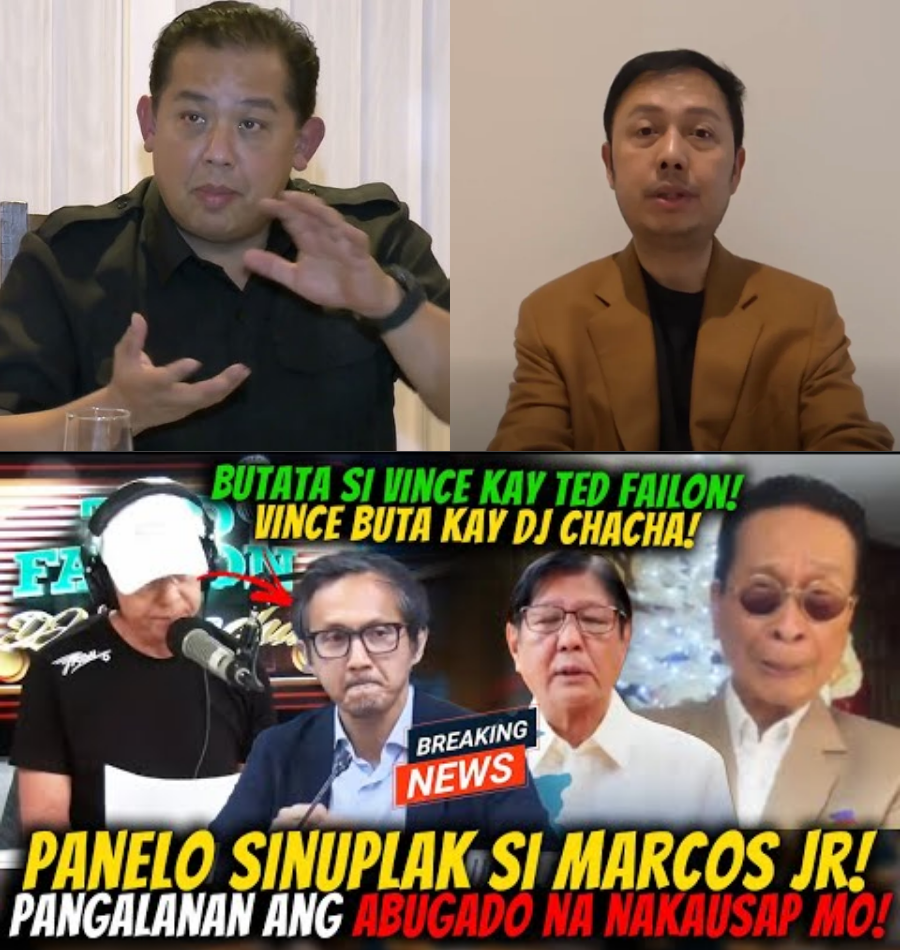
Former Presidential Legal Counsel Salvador Panelo publicly questioned the inconsistency of the claim, arguing that an allegation of extortion must be accompanied by concrete action—an affidavit, a case, or at minimum, identification of the persons involved. Without these, the accusation appears more rhetorical than legal. This lack of clarity created a ripple effect of doubt, forcing the administration to confront the fragility of its own messaging.
The Referral That Raised More Questions Than Answers
The situation became more complex when the DPWH, through the Internal Control and Integrity (ICI) unit, submitted referrals to the Office of the Ombudsman. These referrals alluded to potential violations—including plunder, anti-graft provisions, and bribery—stemming from the distribution of flood control projects.
Curiously, the documents were not uniform.
The referral concerning House Speaker Martin Romualdez carried ambiguous language and lacked explicit accusations, while those related to Zaldy Co and others were described using stronger and more direct terms. This discrepancy provided fertile ground for speculation that preferential treatment was being extended to certain political figures.
During a lengthy radio interview, DPWH Secretary Vince Dizon attempted to clarify the process. He emphasized that the referrals did not constitute formal complaints and that the department lacked the legal authority to file a full criminal case without exhaustive documents such as bank records and verified property titles. Dizon argued that the Ombudsman, not the DPWH, had the tools necessary to complete the investigation.
Still, the timing and manner of the referral appeared rushed. Observers questioned why incomplete reports were forwarded if the agency itself admitted that the evidence required further validation. This contradiction fed into a growing public suspicion that the process had been accelerated not for the sake of truth, but to temper public dissatisfaction.
The Role of Circumstantial Evidence

One of the interview’s most revealing moments came when Dizon acknowledged a spike in the volume of public works contracts awarded to companies allegedly connected to Zaldy Co—particularly during his tenure as Appropriations Chair and under Speaker Romualdez’s leadership.
This admission appeared, at first glance, to establish a link between budgetary authority and project allocation. However, when pressed to specify the wrongdoing inherent in Co’s election as Appropriations Chair, Dizon repeated that the irregularity was “complicated.” He failed to articulate a direct act that violated the law.
Such vagueness undermines the strength of the referral. If the core issue rests on patterns rather than explicit proof, then the evidence remains circumstantial. While patterns can be persuasive, they cannot stand alone in court.
Properties, Influence, and Unanswered Details
Another contentious aspect involves alleged properties connected to involved personalities—such as homes in Forest Park and Tagaytay City—rumored to be meeting points for financial transactions. Yet none of these were definitively attributed to any of the political figures being linked to the controversy.
Dizon conceded that without formal verification of ownership, these claims remain in the realm of speculation. As a result, these properties cannot serve as legal anchors for accusations of plunder or bribery.
This once again highlights a recurring theme: the government is simultaneously acknowledging and disclaiming responsibility, expressing certainty about wrongdoing but uncertainty about the evidence.
The Perception of “Selective Accountability”
As public discussions intensified, many criticized what they described as a cascading pattern of blame. The narrative appeared to shift sequentially—from contractors, to district engineers, to DPWH officials, then to Zaldy Co, and finally to Speaker Romualdez. For some, this progression seemed engineered to shield the most politically sensitive individuals.
Every shift raised the same underlying question: Why does accountability appear to stall at certain levels while advancing quickly at others?
Dizon’s reassurance that “big fish” would be held accountable eventually did little to quell public frustration. Vague promises cannot substitute for transparent action, especially in a climate where trust in institutions already hangs in the balance.
The Political Atmosphere and Public Sentiment
The controversy has not remained confined to administrative circles. It has spilled into public discourse, street demonstrations, and calls for broader political reforms. Some groups have echoed demands for resignations, while others have floated the idea of systemic restructuring. The tension is amplified by ongoing perceptions of political favoritism, lack of transparency, and inconsistent explanations from government officials.
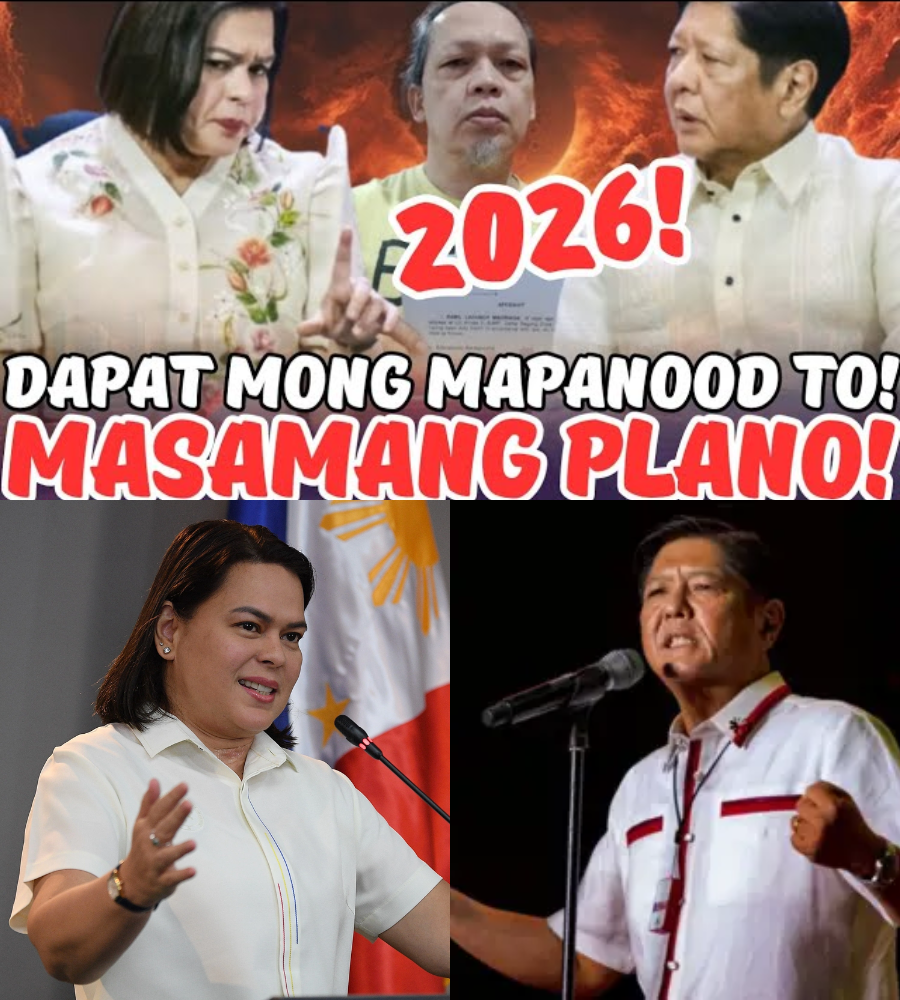
Interestingly, Vice President Sara Duterte—who has not been implicated in the flood control issue—has also been drawn into the narrative by groups calling for simultaneous resignations. This development reflects the broadening political polarization rather than any established connection to the controversy itself.
A Crisis of Credibility
What emerges from this unfolding episode is a crisis not merely of policy, but of credibility. The government’s shifting narratives, incomplete documents, and unverified statements hinder its ability to present a coherent explanation to the public. Inconsistency becomes its own form of evidence—suggesting either internal disagreement, lack of preparation, or hesitation to reveal the full story.
To restore public trust, the administration must commit to transparency:
— Name individuals when making serious accusations.
— Provide documentation when alleging misconduct.
— Ensure referrals are thorough and uniform.
— File appropriate cases if evidence indeed exists.
Anything less will continue to fuel speculation and deepen existing fractures within the political environment.
Conclusion: Accountability Begins With Clarity
The flood control controversy is far from resolved. It has evolved into a larger conversation about governance, institutional integrity, and the standards we expect from public officials. Accountability does not begin with accusations, nor with political maneuvering—it begins with clarity.
Until clear, consistent, and verifiable information is laid before the public, the shadows surrounding this issue will only grow darker. And in a nation long burdened by corruption scandals, every unanswered question becomes a verdict in itself.