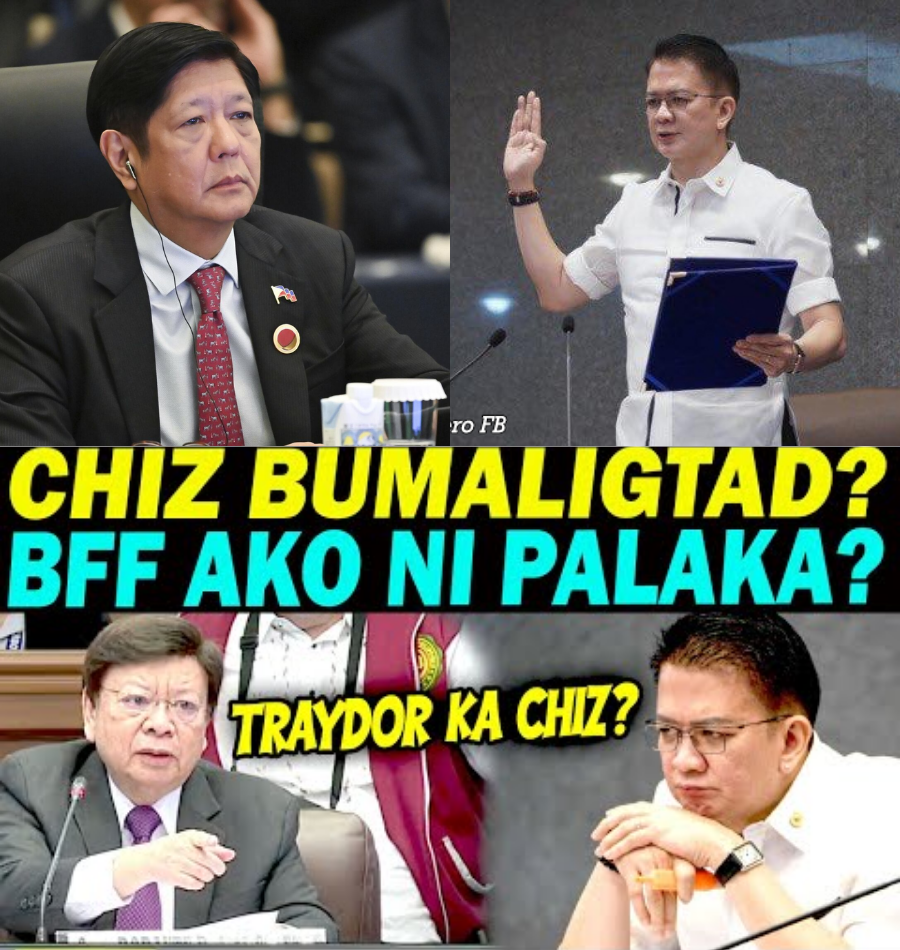
Escudero’s Senate Remarks Ignite Controversy Amid Intensifying Political Friction
MANILA — A lengthy and heated Senate exchange has drawn national attention after Senator Francis “Chiz” Escudero delivered remarks perceived by some political commentators as an unexpected gesture of support for President Ferdinand Marcos Jr., despite ongoing investigations involving the administration and personalities close to it. The incident has triggered an avalanche of reactions online, particularly from critics who have long questioned divisions within the Senate majority bloc.
The controversy began during a Senate session on the Department of Public Works and Highways (DPWH) budget, where Escudero publicly commended the administration for “not following any script or diversion” in its ongoing probe into alleged irregularities in flood-control projects. According to Escudero, the President allowed the investigation to proceed based on evidence alone, even if such evidence pointed toward individuals politically close to him.
“I commend the administration for refusing to participate in any diversion that could mislead the Senate or the public. The investigation followed the evidence, even when it implicated people close to the President.”
This single statement became the spark that ignited a wave of criticism, especially from online commentators who accused Escudero of “folding” politically and siding with Malacañang at a moment when tensions were high.
Political Critics Claim Sudden Shift

Commentators from several political-analysis channels swiftly alleged that Escudero had “shifted allegiance,” pointing out that his Comelec disqualification case was dismissed shortly after his speech — a timing that critics claimed was suspicious.
While no evidence was presented to prove a connection between the Senate speech and the case dismissal, critics insisted that Escudero’s language signaled a departure from his supposedly more independent stance in previous months.
Analysts sympathetic to the administration countered these claims, saying Escudero merely showed “professional courtesy” and acknowledged a procedural reality: that some evidence did implicate individuals related to the President, and the Senate must follow facts regardless of political affiliations.
Still, the timing fueled speculation. Social media pages commonly associated with strongly pro-Duterte commentators repeatedly suggested that Escudero’s remarks were proof he was now “aligned with the Marcos camp.”
Flood-Control Investigation and Allegations of Manipulation
The Senate investigation revolves around alleged irregularities in publicly funded flood-control projects, including claims of “insertions,” “ghost projects,” and questionable contractors. The hearings have become a political battleground, with accusations flying across factions.
Former NBI agent Jonathan Saldíco earlier released documents and allegations suggesting that certain lawmakers, including members of the President’s family, were linked to significant budget insertions. Administration officials denied this, and President Marcos dismissed the claims as “politically motivated.”
During the same Senate session, Escudero reiterated that evidence — not political pressure — should guide the inquiry:
“We must resist any attempt at diversion. Too many innocent people have already been harmed by misinformation and politically motivated accusations.”
Escudero emphasized that while corruption must be confronted aggressively, due process must remain intact. He urged the Senate and the public to avoid “rash judgement,” warning that some actors might be intentionally sowing division for political gain.
Online Reaction: Spiraling Accusations and Political Theater
The hours following Escudero’s speech saw an eruption of commentary on video blogs and livestreams. Many voices expressed frustration, claiming the senator had “abandoned” his earlier positions and was now “protecting the President.” Others speculated that certain allies of the former administration felt betrayed.
Commentators replayed Escudero’s speech repeatedly, some accompanying it with sarcastic commentary, claiming that he had “revealed his true colors.” These reactions, while sensationalized, reflected the growing divide within political factions still vying for influence ahead of the 2028 national elections.
Analysts noted that the backlash illustrates the increasingly polarized environment in which any gesture of courtesy or cooperation between political rivals is immediately viewed with suspicion.
President Marcos Responds to Blackmail Allegation
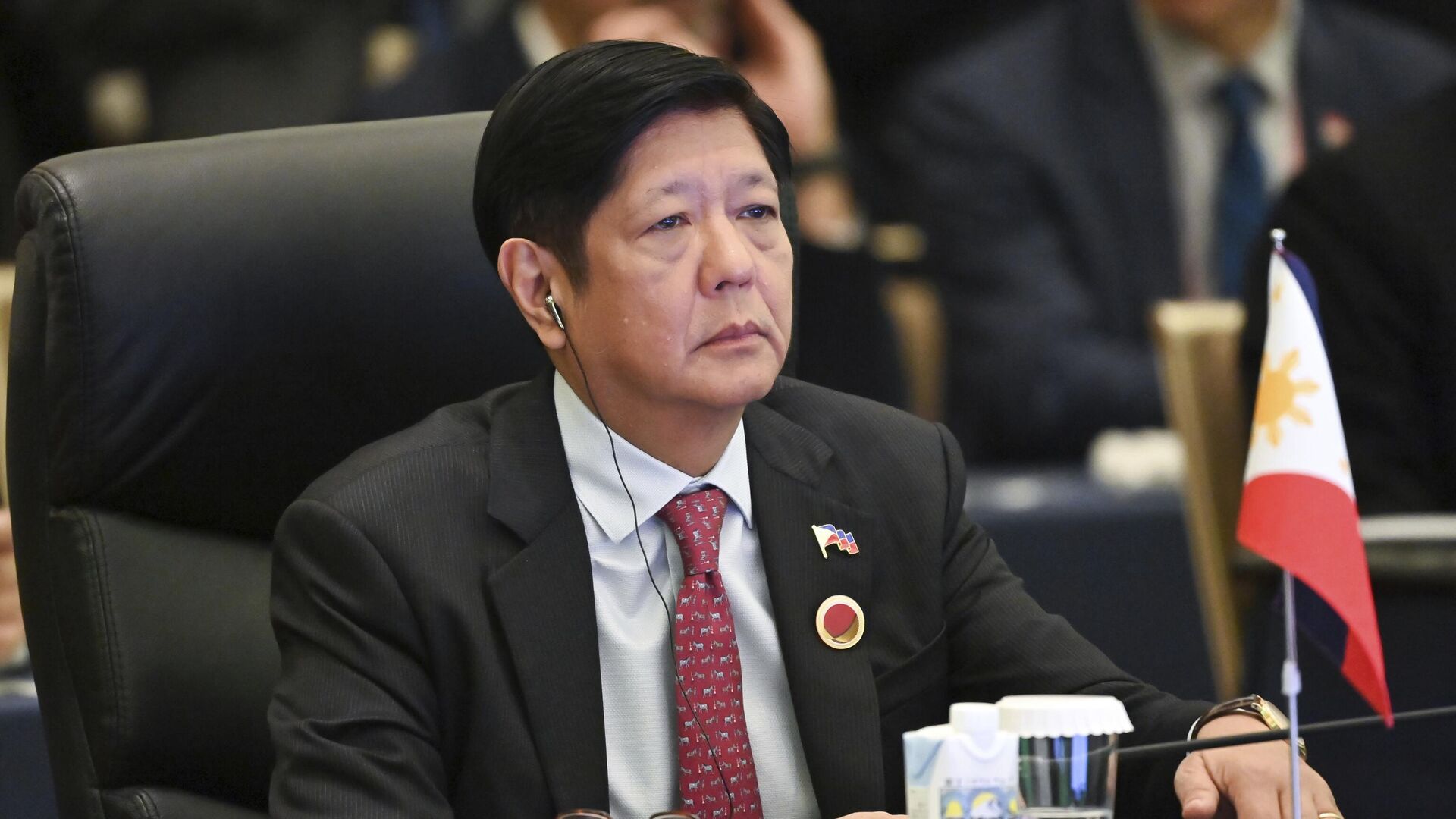
Adding to the tension, President Marcos publicly claimed in a later briefing that a lawyer allegedly connected to whistleblower Saldíco approached the administration seeking to negotiate in exchange for halting the cancellation of Saldíco’s passport.
The President denounced the alleged attempt:
“I do not negotiate with criminals. No amount of pressure will prevent the legal process from moving forward.”
Critics, however, questioned the President’s statement, arguing that the allegations lacked presented evidence. Some opposition-leaning analysts accused the administration of trying to shift the narrative away from the flood-control controversy.
Separate Senate Clash on Health Department Issues
On the same day, an unrelated but equally intense exchange occurred during the Senate’s budget review for the Department of Health (DOH). Senators Allan Cayetano, Raffy Tulfo, and Joel Villanueva chastised the department for procurement delays that led to expired medicines and late vaccine deliveries.
Cayetano challenged DOH’s claim that the issue was purely due to “logistical problems,” asserting that the agency’s explanation placed undue blame on local government units.
“We cannot accept excuses. Vaccines and essential medicines are critical. Delays place millions of Filipinos at risk.”
Senator Tulfo echoed the frustration, warning that persistent delays endangered children and the elderly, while Villanueva emphasized that inefficiencies had cost billions in expired supplies.
This heated exchange — though separate from the Escudero issue — amplified the atmosphere of dissatisfaction within the Senate, contributing to broader public perception of disorder and friction among government branches.
Wider Political Context: 2028 Looming in the Background
Political strategists observing the situation note that the reactions to Escudero’s remarks cannot be divorced from the broader landscape. With the 2028 elections approaching, alliances are shifting, and rival factions are highly sensitive to any perceived loyalty change.
Escudero, long considered a potential national contender, now faces intensified scrutiny from both allies and critics. Whether his Senate remarks will have lasting political consequences remains to be seen.
For now, what remains clear is that the ongoing flood-control investigation, combined with internal Senate clashes on health procurement and other governance issues, underscores the deepening fractures within Philippine politics.
As the hearings continue, both the public and the political elite watch closely — aware that every statement, dismissal, or administrative action can shift alliances and redraw the landscape leading into the next national cycle.