A Storm in the Government: Budget Cuts, Accusations, and a Palace Under Pressure
The political landscape in the Philippines has once again been shaken by a fierce wave of allegations, heated exchanges, and growing public frustration. What started as a technical debate on budget allocations has spiraled into a full-blown political firestorm—one involving senators, cabinet officials, spokespeople, and now even the President himself.
At the center of the controversy is the reported P10-billion cut from a major computerization program, redirected under disputed circumstances. Some lawmakers insist that the funds should have gone to school buildings, while others insist on funneling everything through the Department of Public Works and Highways (DPWH). The public, already fatigued by slow internet, recurring floods, and a lack of classrooms, quickly seized on the issue as another sign of bureaucratic dysfunction.
The situation intensified when former congressman Arnolfo “Arnie” Teves Saldivar—now commonly referred to as “Saldico” in online discussions—released a series of video statements accusing House Majority Leader Sandro Marcos of inserting billions into the national budget. According to him, the alleged insertions amounted to P50 billion and were tied to projects that he claimed were either unused, under-utilized, or completely nonexistent.
Malacañang dismissed these allegations immediately. Sandro Marcos issued a categorical denial, calling the claims “fabricated and baseless,” while government spokespeople emphasized that these matters would be investigated normally—as they should be—regardless of political noise.

But the controversy only deepened.
The government’s own communications official—Usec. (Undersecretary) Claire Castro—faced relentless questioning from reporters as she attempted to address various issues: the authenticity of Saldico’s videos, whispers of a destabilization plot, and even allegations that a leaked audio recording involved her speaking with political vloggers. She denied the recording outright, emphasizing that it came from an unreliable, unverified source.
Journalists repeatedly pressed her to point out inconsistencies in Saldico’s videos. Castro argued that the former congressman’s changing hairstyles, backgrounds, and timelines suggested the videos were filmed across different days, adapting themselves to ongoing public reactions—something she suggested made his statements less credible.
Yet, for every rebuttal from the Palace, Saldico released another video. Public interest surged instead of fading.
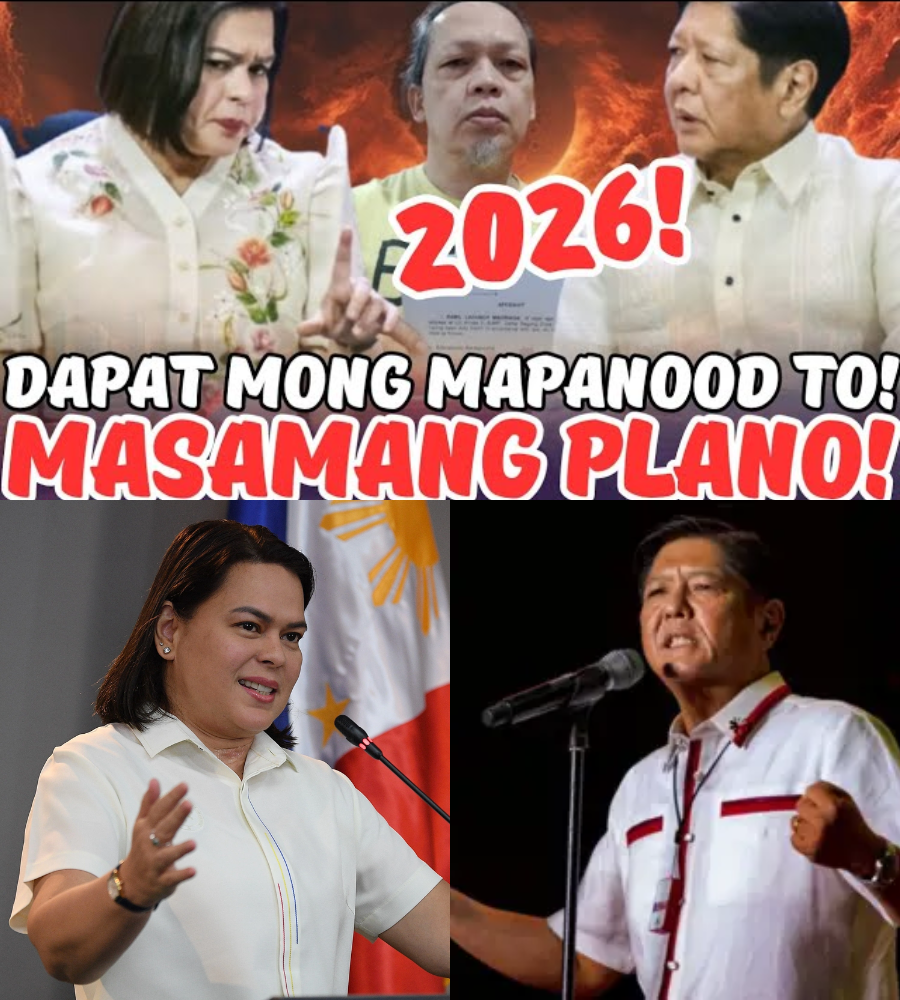
Complicating matters further was Vice President Sara Duterte’s statement when asked if she would be ready to assume the presidency should President Marcos resign. Her answer—“There is no question about my readiness”—was interpreted by the Palace as premature and inappropriate. According to them, readiness for succession should never be publicly anticipated, as such statements could fuel instability and weaken confidence in the administration.
Castro emphasized that constant calls for resignation, talks about transition councils, and speculations about a “post-Marcos scenario” contributed to a climate of crisis. She insisted that the President remained fully capable, actively working, and committed to governing.

But not everyone was convinced.
Outside the Palace, critics argue that what truly undermines confidence is not speculation but the persistence of severe national issues: floods that wipe out communities, unresolved poverty, schools lacking basic infrastructure, and recurring allegations of corruption involving billions in public funds. Viral videos showing families trapped in rising floodwaters have served as painful reminders of what many see as failed priorities. They question how the government can reduce funding for modernization while the country struggles with slow internet, weak disaster infrastructure, and failing public services.
This tension between public frustration and official reassurance forms the backdrop of an even more intriguing development: a confidential letter reportedly written by Saldico to President Marcos himself. The letter—now circulating widely—details his concerns about budget allocations, especially those under the Office of the President. He cites previous budgets from 2023 to 2024, claims inconsistencies in how funds were classified, and mentions various cabinet officials and lawmakers who allegedly interacted with him regarding these allocations.
While the Palace has neither confirmed nor denied the authenticity of the letter, its contents have added fuel to the political discourse, especially as it touches on sensitive issues such as appropriations for flagship projects, national irrigation, disaster funds, and subsidies.
Meanwhile, reporters pressed Castro on whether the President remains in full control of his government. Her response was immediate and emphatic—“Of course.” She insisted that the President remains active and engaged, pointing out that he has not taken vacations or breaks despite ongoing crises.
Still, the storm has not passed.
The government now faces simultaneous challenges: defending itself against allegations of corruption, maintaining public confidence, addressing infrastructure failures, and navigating internal political tensions. Each press briefing raises more questions than answers. Each leaked document or viral statement revives speculation. Each disaster amplifies the urgency for competent leadership.
All these are unfolding while the administration emphasizes unity and stability.
Yet stability, as events have shown, is becoming harder to preserve. The issue is no longer merely about budget insertions or competing political narratives—it is about accountability, transparency, and trust. And for millions of Filipinos watching from afar, the question remains: Can the government navigate this turbulence before it turns into a larger political and social crisis?
For now, the nation watches—closely, anxiously, and with growing impatience—as its leaders attempt to control a narrative that seems increasingly beyond their grasp.