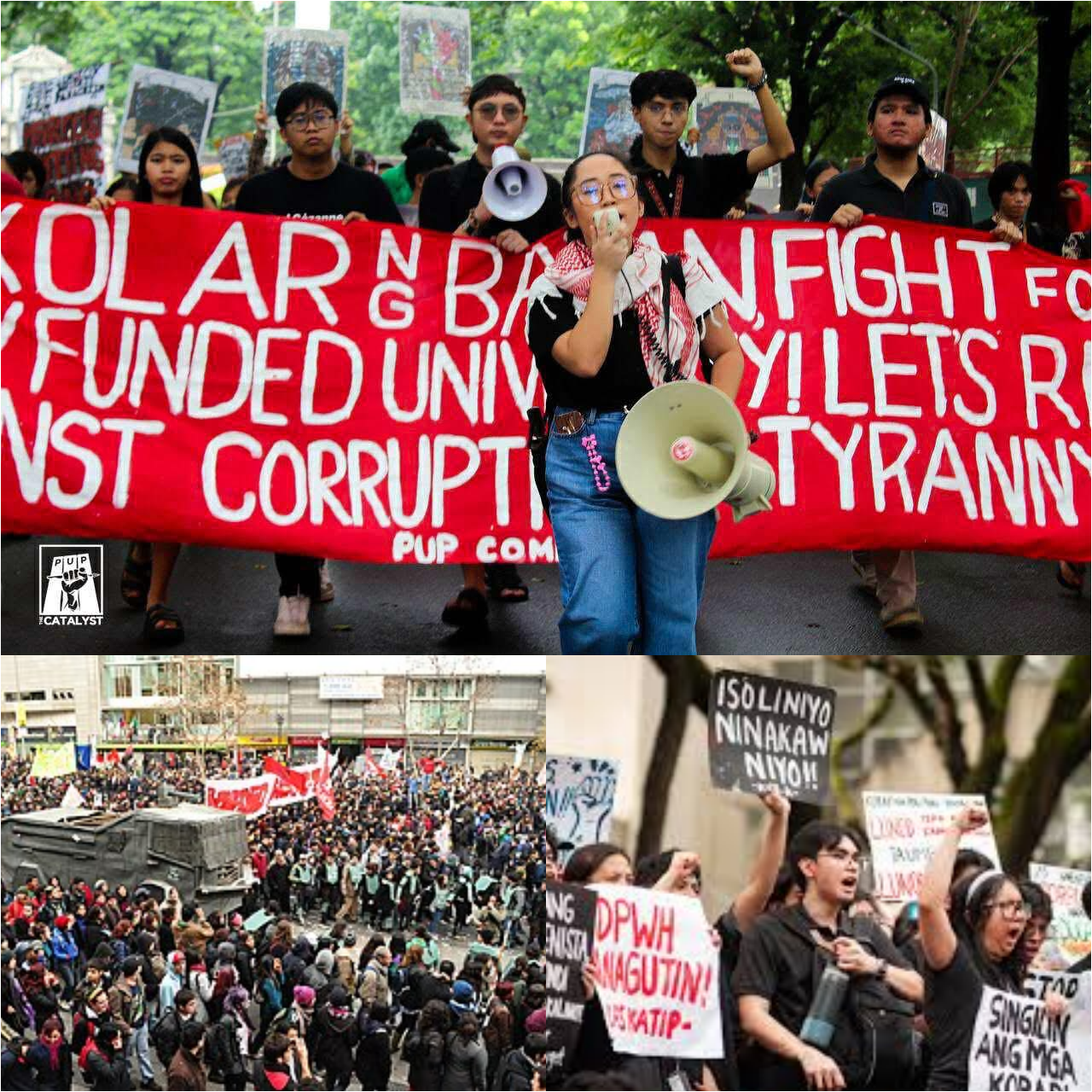
SHOCKING! All Ateneo de Manila University students walked out of class on September 23, turning the campus into the epicenter of an anti-corruption movement — the images and chants of protest shocked the entire country, with public opinion asking: what is going on and when will this extremely tense battle end…? 👇Full story at the link!👇
SHOCKING! Ateneo de Manila Students Walk Out on September 23, Turning Campus into Epicenter of Anti-Corruption Movement
On September 23, an extraordinary scene unfolded at one of the Philippines’ most prestigious universities. Thousands of students at Ateneo de Manila University staged a dramatic walkout from their classes, flooding the campus grounds with chants, banners, and calls for accountability in government.
The demonstration, unprecedented in Ateneo’s recent history, quickly captured national attention. Within hours, images of packed quadrangles, students raising clenched fists, and banners demanding “Justice, Integrity, Reform” went viral on social media. Television networks rushed to the scene, reporting live as the protest transformed the campus into the epicenter of a growing anti-corruption movement.

The Walkout: A Powerful Symbol
Classes began as normal on the morning of September 23. But shortly after noon, groups of students began filing out of lecture halls and laboratories. Professors who had been briefed by student organizers allowed the walkout to proceed without obstruction. By 1 p.m., the main quadrangle was filled with thousands of young people shouting in unison:
“The youth will not be silent! No to corruption, yes to the future!”
The sight was electrifying. Ateneo, known for its academic rigor and its alumni network that includes presidents, lawmakers, and business leaders, had transformed into the stage for a bold political message. The symbolism was clear: if the next generation of the country’s elite was willing to challenge the status quo, the crisis of corruption had reached breaking point.
The Roots of the Protest
The immediate trigger was the release of new investigative reports detailing irregularities in multi-billion peso infrastructure projects. Allegations of overpricing, ghost contracts, and collusion between contractors and government officials dominated headlines for weeks. For students already burdened by economic uncertainty, climate disasters, and lack of opportunities, the reports were the final straw.
“It’s not just about numbers in an audit,” said Maria Gonzales, a political science major and one of the protest organizers. “It’s about realizing that the very money that could build our schools, hospitals, and flood defenses is being siphoned off. We refuse to stay quiet.”
For many Ateneans, the protest was also personal. Several student families had suffered in recent floods and typhoons — disasters worsened by failed infrastructure. “Every year we drown, and now we discover the funds for flood control were stolen,” another student declared into a megaphone. “Enough is enough.”
A Tradition of Student Activism
The Ateneo walkout is part of a long tradition of student activism in the Philippines. From the anti-colonial movements of the early 20th century to the People Power Revolution of 1986, students have often served as the conscience of the nation.
In the martial law era of the 1970s and 1980s, university students risked imprisonment and torture to fight for democracy. Many were jailed, some disappeared, but their courage inspired millions. For today’s generation, September 23 felt like a revival of that legacy.
“We read about it in history books,” said a freshman holding a placard with the words ‘Never Again.’ “Today, we live it. We are no longer just readers of history, we are writers of it.”
A Sea of Blue and White

The protest was visually striking. Students wore Ateneo’s iconic blue and white colors, turning the campus into a sea of coordinated solidarity. Giant banners unfurled from academic buildings read:
“Corruption Kills Futures”
“From the Classroom to the Streets: We Will Not Be Silent”
“The Youth Are Watching”
Chants echoed across the grounds, amplified by drums, guitars, and even improvised percussion instruments. Student theater groups staged satirical performances mocking corrupt politicians, while the Ateneo Glee Club sang reimagined protest anthems.
At one point, students linked arms and formed a human chain around the campus perimeter, symbolizing their commitment to protect the university and its ideals from the corruption plaguing the nation.
Support from Faculty and Alumni
The walkout was not limited to students. Dozens of professors joined the demonstration, delivering impassioned speeches about academic integrity and the duty of intellectuals to speak truth to power. “Our job is not only to teach theories inside classrooms,” one professor declared. “Our duty is to help students turn those theories into real, lived justice.”
Alumni also voiced support online. Former students now working in media, law, and civil society shared memories of their Ateneo years and praised the courage of the current generation. One widely shared post read: “When I was in Ateneo, we dreamed of justice. Today, the students are making that dream real.”
The National Ripple Effect

News of the walkout spread beyond Ateneo’s walls. By afternoon, solidarity protests were staged at other universities including the University of the Philippines, De La Salle University, and Polytechnic University of the Philippines.
High school students in Quezon City held a brief walkout of their own, inspired by what they saw online. Labor unions and civic organizations expressed solidarity, promising to join future actions.
Television commentators compared the movement to the early days of People Power, noting how a seemingly small action by a group of students ignited a wave of national consciousness.
Government Response
The government’s reaction was measured but defensive. Spokespersons dismissed the walkout as “youthful theatrics” and urged students to “focus on their studies instead of street politics.” Yet the sheer scale and discipline of the protest made such dismissals ring hollow.
Some lawmakers, however, acknowledged the legitimacy of the grievances. “The students are right to demand transparency,” one senator said. “Corruption undermines not only our economy but the moral fabric of our society.”
Meanwhile, the Department of Education released a statement promising to “engage students in dialogue.” Critics dismissed this as a token gesture.
International Attention
International media outlets quickly picked up the story, highlighting how the Philippines’ young generation was taking a stand against corruption. Headlines in Asia, Europe, and North America framed the Ateneo walkout as part of a global wave of youth activism, from climate protests in Europe to pro-democracy movements in Asia.
Filipino communities abroad organized their own solidarity actions. In New York, students and young professionals gathered outside the Philippine Consulate holding signs that read “Ateneans Abroad Stand With Ateneans at Home.”
Emotions on the Ground
What struck many observers was the raw emotion of the day. Students cried as they recounted personal stories of loss due to government negligence. Survivors of typhoons spoke of homes destroyed and futures jeopardized. Others shared frustrations about tuition fees rising while state funds were squandered.
In the late afternoon, the crowd held a candle-lighting ceremony. Thousands of tiny flames illuminated the campus as students sang songs of hope and solidarity. The atmosphere was both solemn and defiant, a moment etched in memory.
Beyond Symbolism: What Next?
By evening, organizers declared the walkout a success and announced plans for follow-up actions. They proposed a week of forums, teach-ins, and community outreach programs to sustain momentum. A petition demanding an independent investigation into corruption allegations had already gathered tens of thousands of signatures by the end of the day.
“We are not stopping here,” declared one student leader. “Today we walked out of classrooms. Tomorrow we will walk into communities, into the halls of Congress, into the very spaces where corruption hides. This is just the beginning.”
Analysts Weigh In
Political analysts were quick to interpret the walkout’s implications. Some argued it could be the spark of a broader nationwide protest movement, especially if it connects with labor unions, church groups, and civil society. Others warned of potential cooptation by political elites.
“The beauty of the Ateneo walkout is its purity — it comes from students, not politicians,” said one commentator. “The challenge will be to maintain that purity while expanding into a broader coalition.”
A Generation Awakened
Above all, the September 23 walkout demonstrated that the youth of the Philippines are no longer willing to sit silently as corruption drains their country. They have inherited the legacy of People Power but are reshaping it for a new era — an era where social media amplifies their message, where global solidarity strengthens their resolve, and where the fight for integrity is inseparable from the fight for survival.
The slogan heard again and again throughout the day summarized the spirit:
“We are the youth. We are the nation. We are fighting!”
As the sun set over Ateneo’s sprawling campus, students remained gathered, refusing to disperse until their message was clear. They promised to return, louder and stronger, until corruption is confronted at its root.
For the Philippines, September 23, 2025, will not be remembered as an ordinary school day. It will be remembered as the day students turned classrooms into battlegrounds, lectures into chants, and a campus into the heart of a nation’s struggle.
Conclusion: The Beginning of a Movement
The Ateneo walkout was more than a protest; it was a declaration. It declared that the youth will not inherit a nation broken by corruption without a fight. It declared that silence is complicity. It declared that history is not only to be studied but to be written.
Whether this sparks a lasting movement or becomes a one-day spectacle depends on what happens next. But one truth is already certain: the Philippines has entered a new chapter in its fight against corruption, and the youth are leading the charge.
The chants, the images, the determination of September 23 will echo long after the candles have burned out. And perhaps, years from now, students will look back and say: “That was the day we stood up, and everything began to change.”